A Lifelong Legacy
Over the years, M*A*S*H has collected an eternally passionate and devoted cast, crew, and fanbase that has only grown since the show’s end. The emotional roots of the series had driven themselves into viewers early on, as evidenced by the audience response to the death of Lieutenant Colonel Henry Blake, the original commander of the 4077th MASH.
In the season three finale, “Abyssinia, Henry,” Lt. Col. Blake receives his discharge orders, finally able to return home to his wife and children. He spends the episode celebrating, the camp saying its goodbyes and reminiscing with him as he prepares to leave the 4077th for good.
In the final scene of the episode, Radar comes into the operating room to read an announcement: that Henry Blake’s plane had been shot down over the Sea of Japan, leaving no survivors. In silent shock, the doctors and nurses are forced to return to their work.
Henry’s sudden death was written as a reality check about the tragedies of war, and the audience response reflected the volatile emotions expected from those who are grieving. Larry Gelbart and Gene Reynolds received hundreds of letters from fans following the episode’s airing, many of whom said death had no place in a comedy show and demanded the episode be rewritten to include the colonel being found alive. On the other hand, however, some fans displayed quite a poignant understanding of the episode, such as one author who insisted the episode was crucial to the audience’s understanding of war, even when it is being packaged as a comedy.
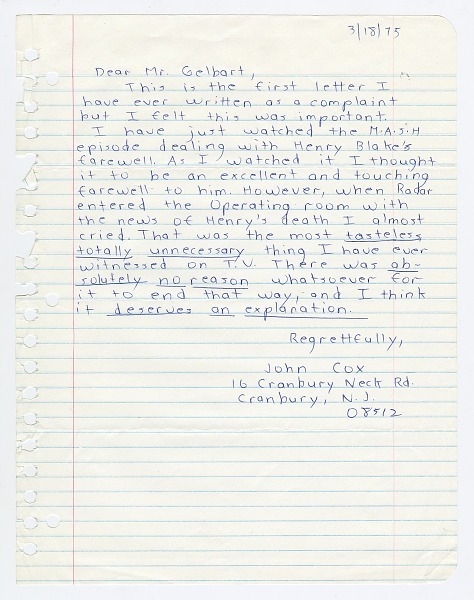
Letter from an upset viewer
The devoted M*A*S*H fanbase consisted of adults and children alike, and in Hollywood fashion, the series spawned a vast range of merchandise, toys, and other collectibles. Magazine issues, ornaments, action figures and scale models, board games, and even M*A*S*H-branded liquor and first aid kits were among the items developed for fans. M*A*S*H item collectors have spawned all over the world, some casual and some dedicated, and though most of the rare items have been preserved in someone's collection or donated to a larger one, other more common objects can be easily found on eBay or other online marketplaces.
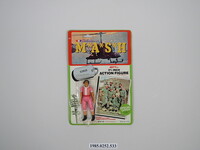
Klinger action figure
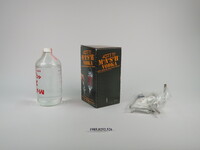
M*A*S*H-branded vodka with dispenser
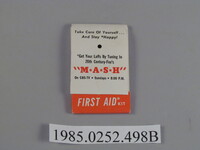
M*A*S*H-branded travel first aid kit
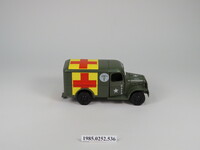
Toy ambulance
When M*A*S*H came to a close in 1983, the emotional commemoration of the final episode was widespread and varied, and its impact rivaled that of any Super Bowl. CBS sold 30-second advertising spots for $300,000, or roughly $1 million in 2025. With around 106 million viewers, M*A*S*H’s “Goodbye, Farewell and Amen” was the most-watched television broadcast of all time, excluding any Super Bowl broadcast. The producers even received congratulatory letters from Richard Nixon, Gerald Ford, and Jimmy Carter, the three presidents who were in office during the show’s run.
After M*A*S*H officially wrapped, a curator at the Smithsonian wanted to approach Twentieth Century Fox, the show's production studio, about donating a handful of objects to the museum from the show’s run, but the production company was one step ahead. Recognizing the impact M*A*S*H had on fans and the legacy it would leave, Twentieth Century Fox donated thousands of items to the Smithsonian, from scripts, photographs, costumes, and props, to interview transcripts, collectible merchandise pieces, and even entire sets.
The Operating Room and “Swamp” tent sets were given in totality to the museum, and when they were curating the “M*A*S*H: Binding Up the Wounds” exhibit for the National Museum of American History in 1983, both sets were displayed as accurately as possible within the confines of the museum space. The exhibit’s opening ceremony included a Q&A panel attended by producer Gene Reynolds, as well as stars Alan Alda, Mike Farrell, and William Christopher.
Most of the prop medical equipment used on the show was authentic to the Korean War era, so by donating it to the Smithsonian, it helped expand the institution’s military and medical history divisions.
“M*A*S*H: Binding Up The Wounds” closed in February of 1985 after two extensions, and saw over 1 million visits during its installment. The Smithsonian is still in possession of the M*A*S*H collection to this day, and archivists are slowly working on digitizing the collection for public access.
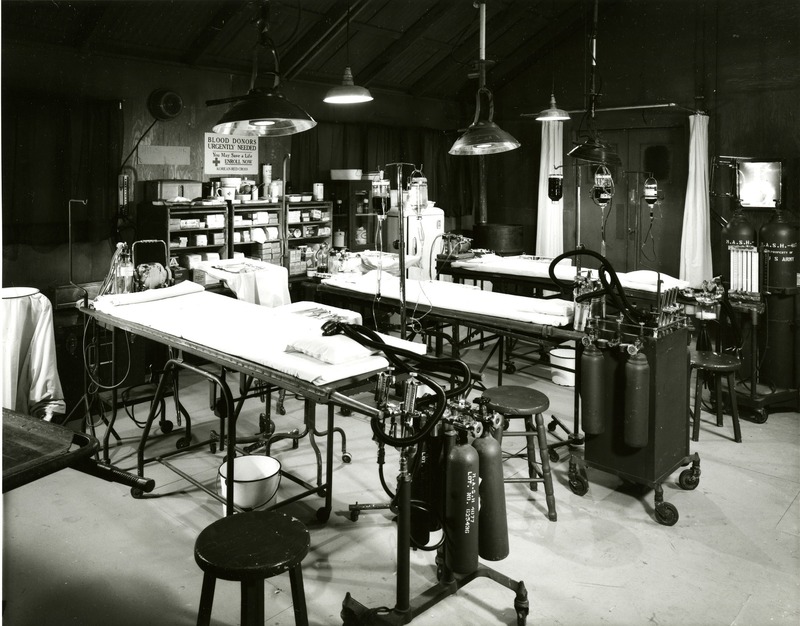
The operating room set on display at the National Museum of American History
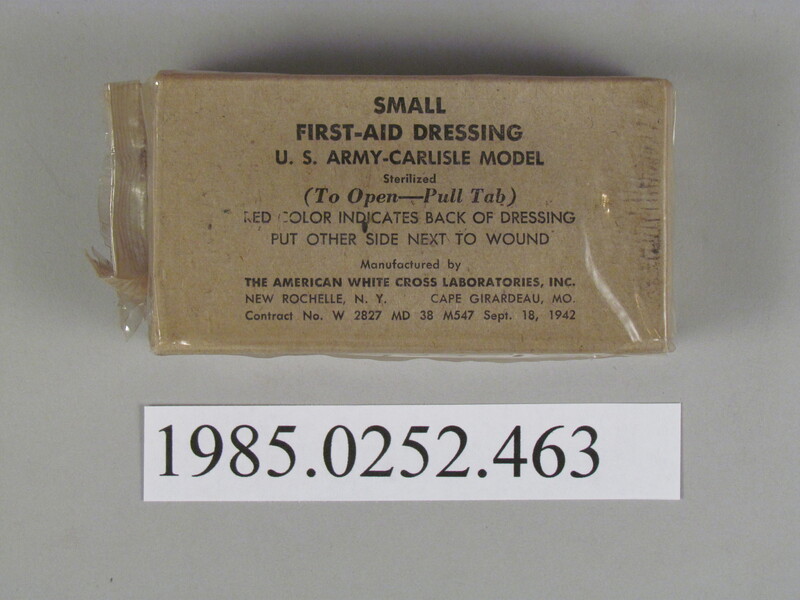
Authentic surgical dressing used as a prop on M*A*S*H