the culture of the uniform
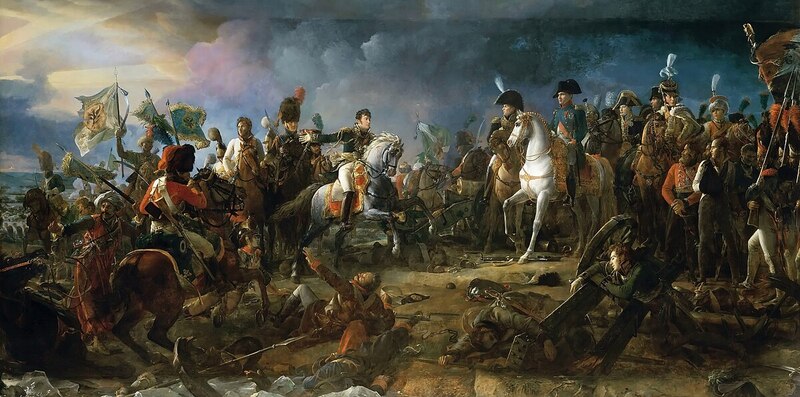
The Battle of Austerlitz (Slavkov u Brna, Czechia, 1805) often referred to as the "battle of three emperors" (russia, austria, france) where Napoleon crushed both Russia and Austria. This was one of the most important battles of the Napoleonic wars where it split the German states by the Confederation of the Rhine into French hands.
Pictured in the painting is a dramatic scene unfolding where Generals are discussing terms of the war exchanging captured russian officers and Generals notably Prince Repnin commander of the Russian Imperial Guard, on the rights is the French army with a captured Imperial Guard prince, flanked by Mameluke (slave soldiers) in their modified traditional calvary uniforms with a turban and Hungarian style hussar uniforms and on the left is Austrian and Russian generals and soldiers with Turkic and cossack soldiers next to them. As well as Hungarian Hussars by the Russian generals, The officers and generals have uniform embellishings around their hats and uniforms in gold. Grenedier generals are also seen behind each side's emperor with their black bear pelt caps. Some of the officers on both sides are wearing the tricorn side caps with plumes on top.
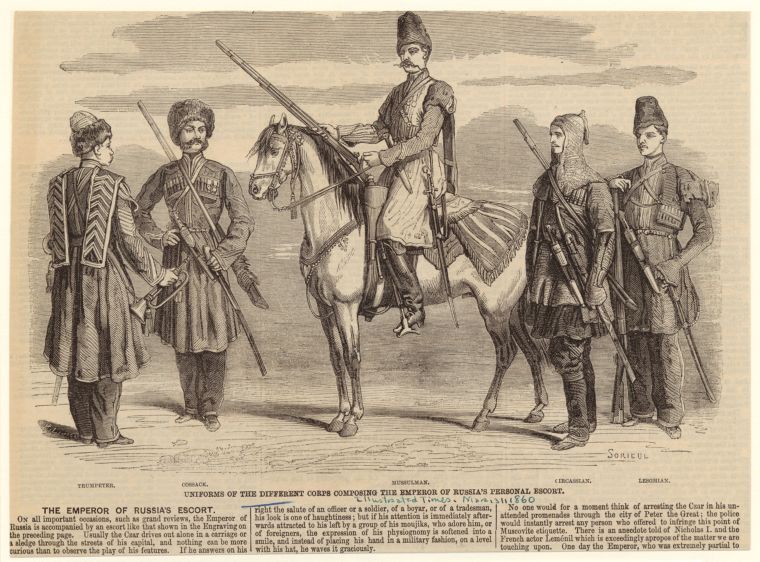
The Cossacks were comprised of multi ethnic groups of Slavic and Turkic peoples. Don Cossacks primarily lived in Ukraine and Southern Russia. Mussulman were ethnic Russian Muslims from the Northern Caucuses and Tatarstan. Circassians inhabited the Northern coasts of the black sea. Lesghians , and Lesghians inhabited Azerbaijan and Russia.
This photo features five men of various regions the Steppe region Cossacks who were employed by the Russian army. They wear many of the traditional dress,like the Chokha and the Bashlyk winter hat their is exotic in appearance compared to the plain dark green Russian army conscript.
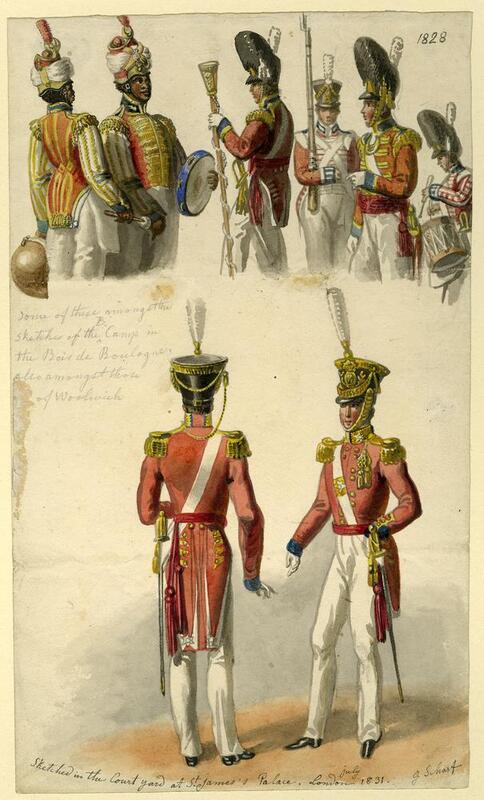
The British Empire encompassed many Asian countries and cultures, The East Asia Company recruited many of the foreign troops into the British army to serve various roles within the army, most notably they put many trained in musicial instruments that were considered exotic and different from the flute and drum. Turkish and Indians were profound in their procussion practices and were not only playing in dance halls, but also in battle lines with other musicians relaying information to the command with different cadanaces and rythyms.
Pictured is two sections of a paper, the top having six British soldiers, four grenadiers and fusiliers alongside two "orientals" with tambourines who were Turkish, African, and Indian men recruited by the British East India company. The bottom portrait of a 2nd Foot Guard Coldstream Guard who have served continuously under the British since the 1600's.
The Black Brunswicker fought against Napoleon during the Napoleonic Wars. Fighting in several major battles, including the Battle of Waterloo (1815). After the Confederation of the Rhine several states rebelled against the French, joining the British as a paramilitary back bone force.
This picture shows a Black Brunswicker NCO with his Dead's Head insignia shako holding his wife. The skull and bones on his shako. They adopted the dead head skull, and a black uniform to mourn the loss of their duke Charles William Ferdinand that was killed by the French in the battle of Auerstedt (1806). The totenkompf became popular imagery as rebellion and courage after the Napoleonic wars, being adopted by the German stormtroopers who charged into trenches folding defensive lines. However, after WWI. The Nationalist Socialist movement adopted the totenkompf for the SS the main Nazi paramilitary for Hitler, and they were responsible for orchastrating the holocaust, conducting genocide campaigns around Europe against minorities and were involved in every military front of the war.
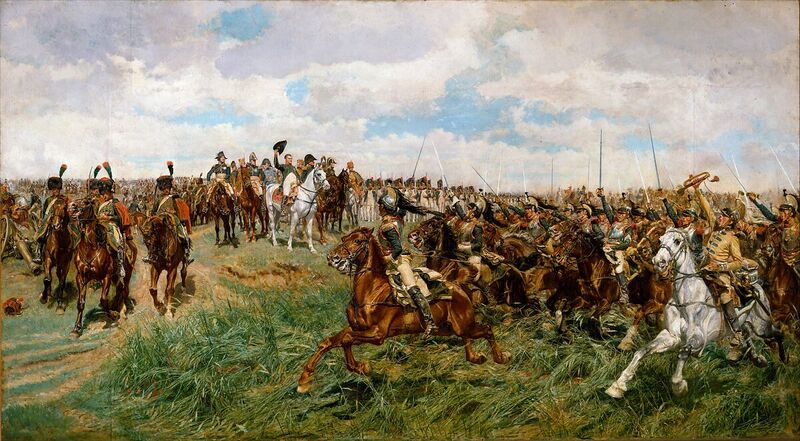
The battle of Friedland (1807) was a major battle during the Fourth coalition. The Battle of Friedland between France and Russia where France crushed Russia's army. This lead to the end of the Fourth Coalition, and Russia pursued peace following this battle with the Treaty of Tilsit.
This painting depicts a dramatic scene of the French army with infantry and calvary units preparing to charge the Russian army. The Calvary depicts the Dragoon units, and also units wearing more traditional Hungarian hussar uniforms. The commanders circle having hussars wearing modified version of the Hungarian hussar uniform with French shakos and plumes.
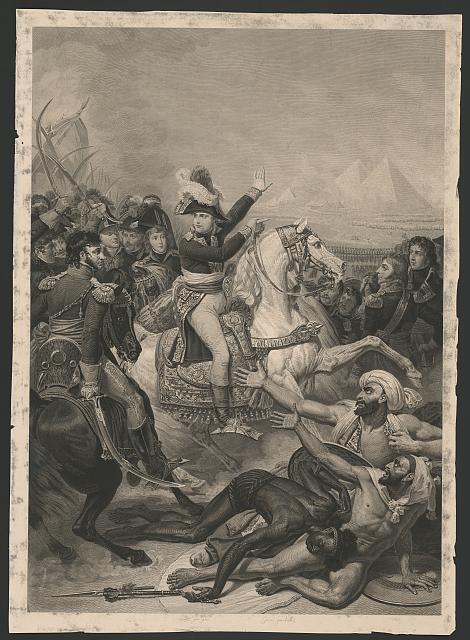
One of Napoleon's first conquests was Egypt (1798), he crushed the Egyptian and Mameluk armies. Mamluks are slave soldiers who ruled Egypt and Syria who were captured from all over the world and sold to sultans and amirs as boys who are trained to be soldiers and servants. Many of these boys adopted arab, egyptian customs, converting to Islam and wore Turkic and African style garbs.
The photo shows Napoleon and officers by the pyramids with two defeated Mameluks on the floor. After the defeat of the Mamelukes, Napoleon adopted them into the army allowing them to wear many portions of their traditional garb while adopting uniform customs of the French and Hungarian influences.
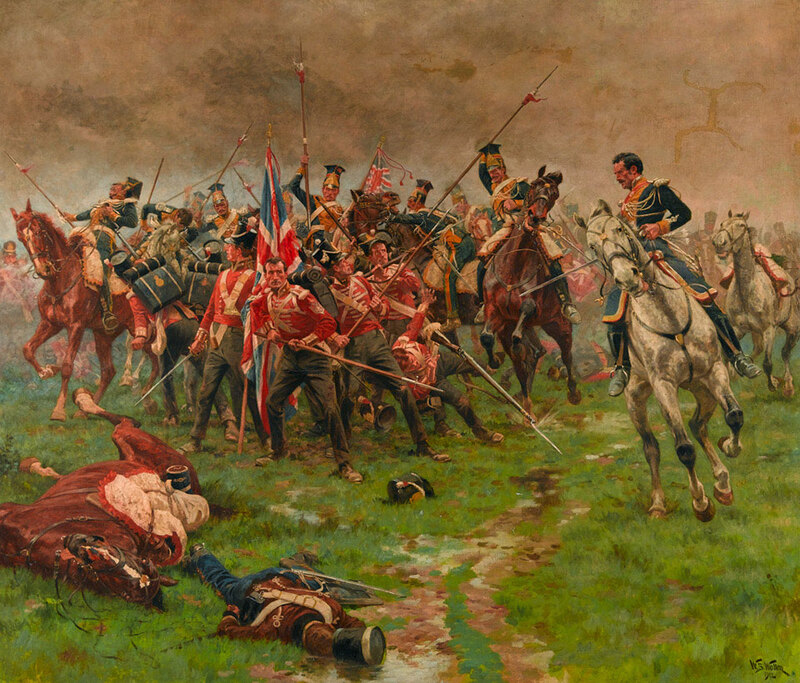
This picture depicts French Army, Polish Uhlan and French lancers wearing traditional Polish Czapka four peaked caps, and Polish lances which were incorparted to non-Polish units in the French army and other armies. The lancers are encircling the British 1st and 3rd of foot regiment troops during the peninsular wars. During the Battle of Albuera (1811) Where French forces attacked Spanish and British troops during the peninsular wars.
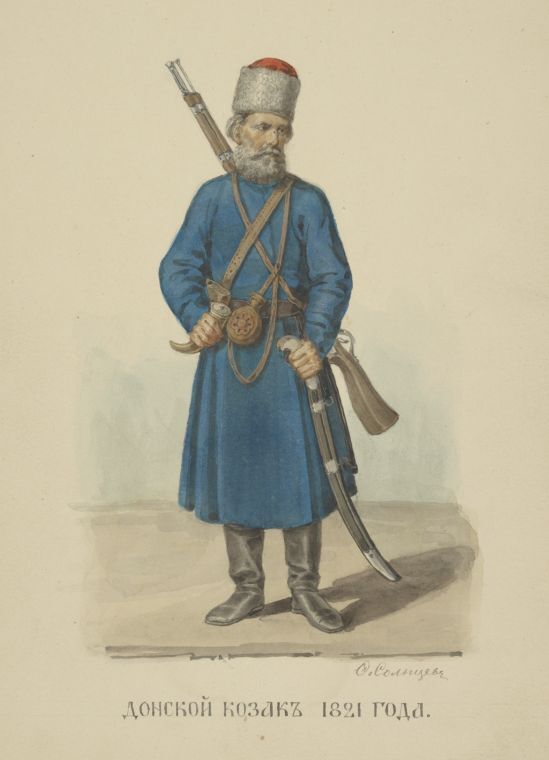
The Cossacks were apart of the back bone of the Russian army during the Napoleonic wars, Cossacks are groups of runaways soldiers, serfs, and criminals of Russian, Persian, and Turkic ethnicities hiding in the Steppes region of modern day Ukraine, Southern Russia, and the Caucuses , Cossacks were skilled light calvary and infantry units, often cossacks scouted enemy positions and ambushed routes. Napoleon on several occasions had to defend themselves from the hordes of Cossacks during the Russian campaign (1812) and barely made it out alive, losing many French Imperial Guards in the process.
This picture features a Don Cossack from Southern Russia. He is dressed in traditional Cossacks dress and a Papakha fur hat. He is armed with a curved saber.
One of Napoleon's first conquests was Egypt (1798), he crushed the Egyptian and Mamluk armies. Mamluks are slave soldiers who were captured from all over the world and sold to sultans and amirs as boys who are trained to be soldiers and servants.
The photo shows Napoleon and officers by the pyramids with two defeated Mamluks on the floor.
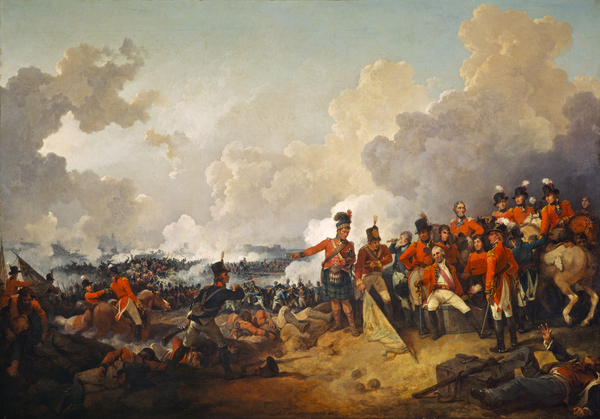
The Battle of Alexandria in (1801) was one of Napoleon's first campaigns and deepened tensions between the Coalition and France. Britain had a large show of force, including Scottish Highlanders 42nd Black Watch and Irish soldiers who took part along side British soldiers. The British forces 40th, 23rd, and 58th regiment of foot crushed French troops in Naval and land combat.
This photo has several Scottish and Irish troops, on the right side rendering aid to Sir Ralph Abercromby who later succumbed to wounds during battle. French and British troops are seen in the background fighting.
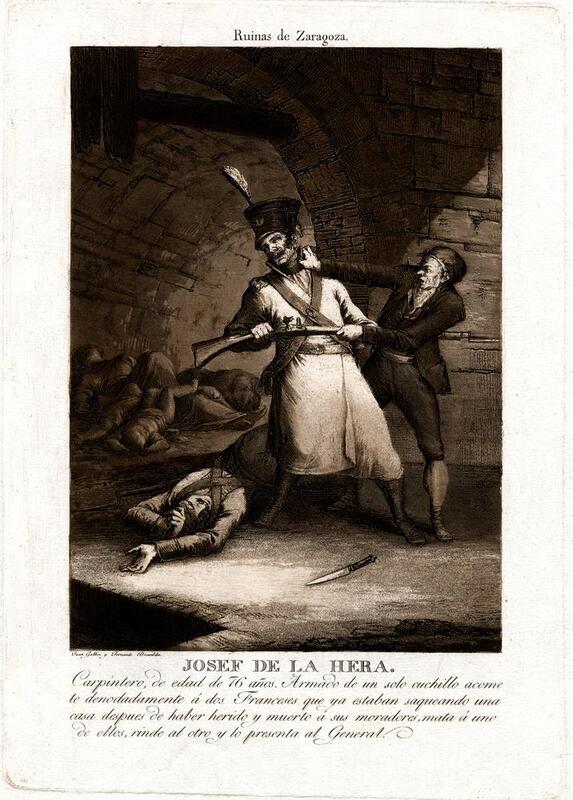
The peninsular wars (1808-1814) was one of the longest campaigns during the Napoleonic Wars, following Spain's alliance with France Napoleon boldly put his brother Joseph as king, this angered the Spanish and Portuguese as France was invading the Iberian peninsula. The Spanish and Portuguese organized guerrilla style warfare, largely different from the line battles and large calvary charges. This guerrilla warfare was street-to-street and brutal, civilians and militias took arms with the Spanish army to fight the French, the peninsular wars was considered the most "violent" campaign of the war, civilians were abused, stripped, and executed.
This picture shows a fictional character in a series of novels "the Ruins of Saragossa" Josef de Hera fighting against the French, in many of these pictures he is in civilian workers clothes fighting French soldiers against the injustices of their cruelty. Behind the scene of the brawl, there is another dead soldier and a dead family in the alleyway.