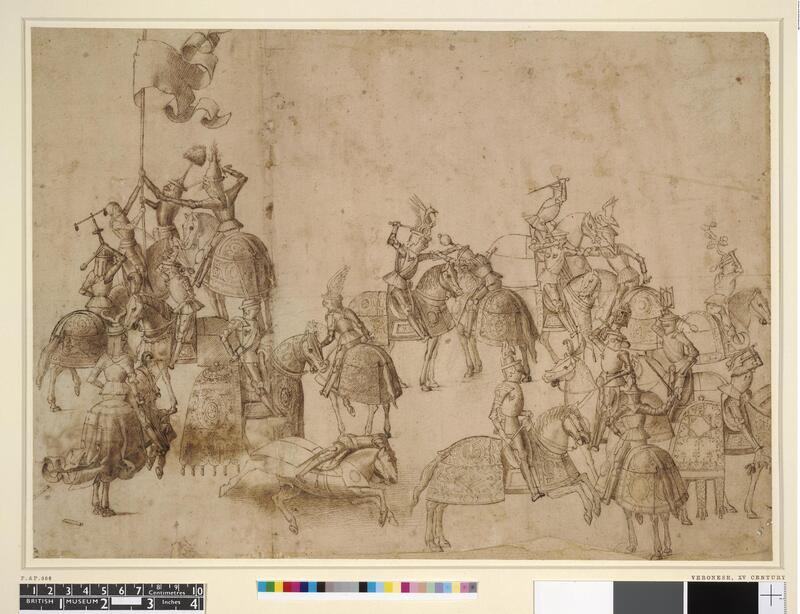
The Medieval Mêlée: Early Stages of the medieval tournament.
The medieval tournament was a cultural event that was present for a large majority of the medieval period. Having roughly started in the 10th century and lasting up to the 1600s. While the tournament went through many different stages and encompassed many different phases of the medieval period, it was present in some form or another for the better part of a millenium. In the early days of medieval martial sport the tournament was held in open areas and resembled warfare of the period; namely men on horseback using arms and armor that were known and comfortable to them yet were often blunted in an attempt to prevent death, though it did sometimes happen. This was known as a tourney or melee and this mass combat would evolve into what was to be much more formalized and spectacle driven, the tournament. It must be said that there was also a form of organized combat that was very much intended to not be as dangerous; Alan Murry points out in The Medieval Tournament as Spectacle: Tourneys, Jousts and Pas d’Armes 1100–1600 “a non-violent form of military exercise known as a bûhurt in Middle High German and béhourd in Old French”.
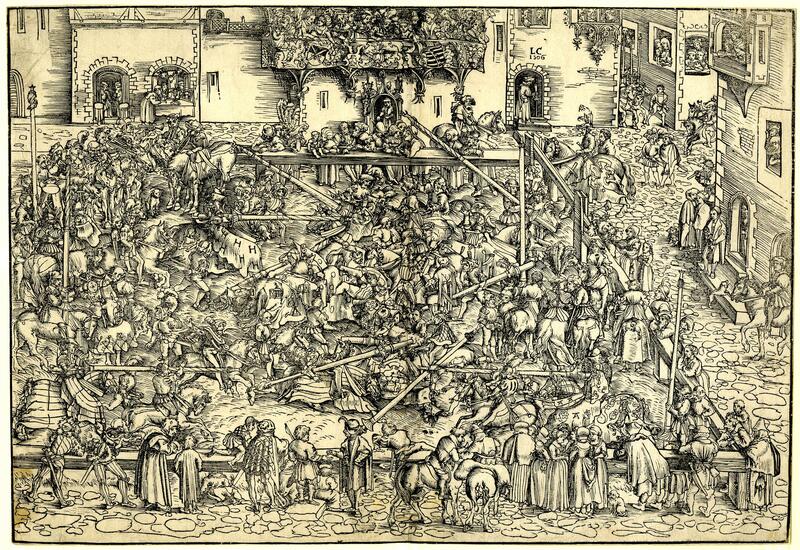
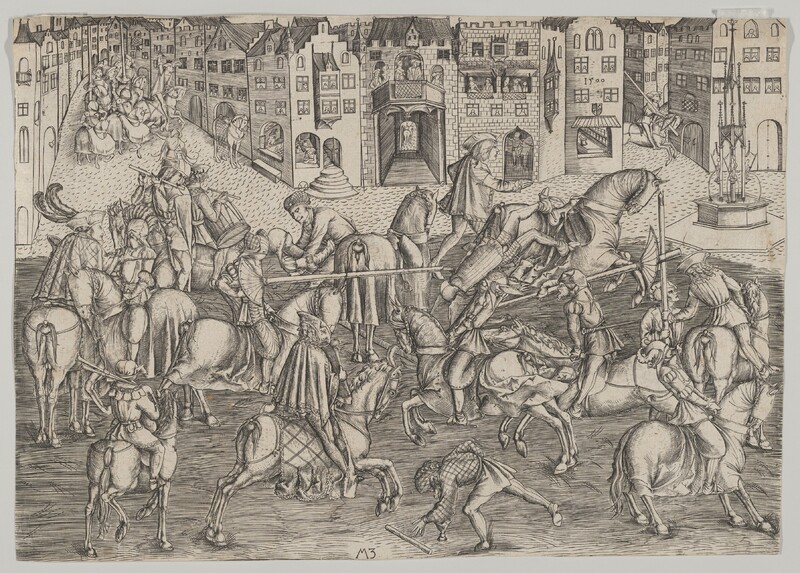
The same form of battle tactics that was used on a field of battle would be utilized in these melee tournaments, namely horsemanship in a cohesive formation, delivering a charge into each group's ranks. Usually there were two large groups or teams as we would describe them in modern terms. These two teams would engage in a mock battle with “the only significant difference being that participants were not supposed to kill or injure their opponents. It was thus an activity in which two important military skills could be practised in peacetime: maintaining close and orderly formation while delivering a charge, as well as reforming after formations had broken up or retreated away from the enemy”. This exercise was important for keeping knights practicing, with the opportunity to further hone their skills in a manner that was not only for the most part safe, due to the fact that they were still armored, but it also gave them an opportunity to increase their status and wealth. There are elements of this that have lasted well into the present. Athletes that perform in team sports today also practice their skills in the same manner, whereby two squads will engage each other and practice their skills and craft in a safe environment with the objective of exercise and enhancing performance for when it matters most.