"We're all born naked, the rest is drag"
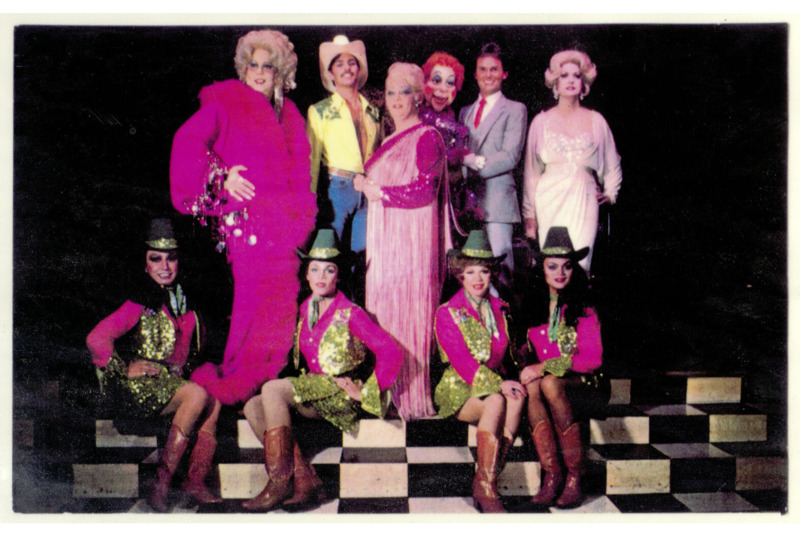
Group Photograph of Finocchio's performers
Group Photograph of Finocchio's performers, 1980-1990
Redefining Drag
Rupaul’s Drag Race has become one of the premier reality TV shows in the United States since its inaugural season in 2009. Fans flock to conventions, viewing parties in gay bars, and local events to see the glamour and allure of drag queens. However, the community that has evolved around drag is not by any means recent. While passionate fans may have familiarized themselves with the ballroom and drag scene that came into public’s general awareness in the late 80s and 90s, most are not versed in the true history of drag. To understand drag’s deep roots in American history and culture as a form of political activism, one must first look to the early 1900s. Drag has since blossomed into queer spaces, finding comfort in nonconformity. The drag queens of the late 1900s were the brave queer community members of the early gay liberation movements that have allowed so many queer Americans to express themselves freely. In this exhibit, you will examine the evolution of drag as a form of political protest, from the early Vaudeville stages to the global phenomena of drag today.
Content Warning
This exhibit utilizes some historic language used to describe the art form of drag that may no longer be used as common practice today. Additionally, some content may be disturbing or upsetting for some viewers. Items include derogatory language, police violence, or other homophobic and transphobic remarks. While some of this language is not acceptable today, its use throughout history is important to document and recognize as part of the discrimination faced by the LGBTQ+ community. Members of the LGBTQ+ community have also reclaimed some of this language. Terms once considered discriminatory have now been used as identifiers and labels within certain groups. As you navigate through this exhibit, it is important to keep in mind the implications of the derogatory language used within and outside of the LGBTQ+ community.
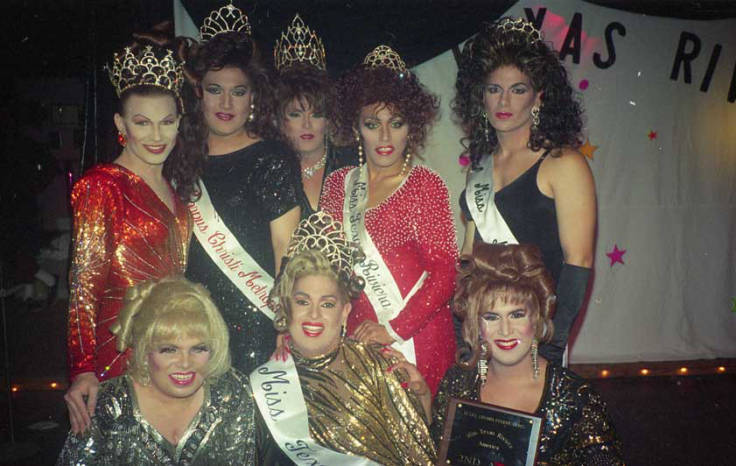
Miss Corpus Christi America
Miss Corpus Chrisit America. 1992.
Curatorial Statement
In this exhibit, you will be guided through the evolution of drag from its beginnings as a post-war form of entertainment, to the modern performances and pop culture movements drag queens have become associated with today. Within each era, an evolved kind of expression and community emerges from different restrictions and laws drag performers have had to fight against. In this way, drag queens are not just entertainers, but fierce protectors of queer freedoms and liberties. By exploring this evolution from the 1920s and onwards, you can see how drag has defended the LGBTQ+ community through performance and protest. Included items show the changing appearance and attitudes towards drag queens, as well as how communities have built off the activist foundations of past groups. In addition, seeing different drag queens throughout time show the continued desire to experiment with gender, and the challenging of gender norms. I want other queer community members to be able to use this exhibit to educate themselves on such an important part of queer culture. I've included objects from fundamental activist groups, like the Society for Individual Rights, to provide a more in-depth background of queer activism. Drag has embedded itself in the language, lifestyle, and culture of queer communities, and much of their freedoms can be attributed to drag queens. Before curating this exhibit, I had minimal knowledge on the history of drag. I want to not only enhance my own understanding of drag in the United States, but share that knowledge with others. I've included some more recognizable figures, like RuPaul, to connect the stories of the past in the exhibit to modern day performers that are still fighting for queer rights. A special thanks to the GLBT Historical Society, the archival source where many of the materials for this exhibit are from. I want to utilize their collections to create the unfamiliar story of how drag has become such a prominent part of queer culture. Drag is not just a trendy TV show or brunch activity, but a performance art with a long standing history in the lives of queer Americans.

My name is Bowie Aitken and I am pursuing my Bachelor of Arts at Northern Arizona University in Comparative Cultural Studies, with minors in Museum Studies and Environmental Humanities. After I graduate, I will pursue my Master's in Art History, specifically late 19th and early 20th century art. I chose this topic because as a long time fan of RuPaul's Drag Race, I was immediately drawn to the GLBT Historical Societies online collection, which contains a plethora of archival drag materials. Drag has been so fundamental in acquiring the rights of countless queer Americans, and is what allows me to present myself freely today. This exhibit will acknowledge the hard work of drag queens, and share the history of the art form with others. This project was made for my Digital Humanities class using Omeka S.
- Bowie Aitken