The Homophile Movement
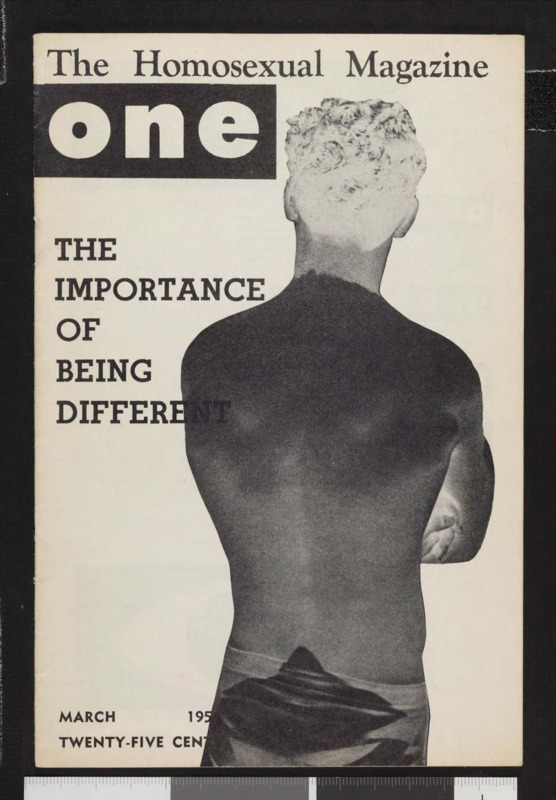
While drag performances were being sequestered and restricted to queer spaces, a gay and lesbian liberation movement began. The homophile movement is an era of pre-Stonewall LGBTQ+ activism believed to have been born in 1950. Featured on the left is a volume from a prominent homophile organization, ONE Magazine. The publication ran from 1953 to 1967, and is the first legally sanctioned U.S. publication reporting specifically on issues and conversations of homosexual communities. However, despite drag’s history as a safe space for queer communities, it was effectively outcast and separated from the homophile movement. Debates arose about how drag represents the gay community as a whole; some activist groups believed drag leaned too heavily into effeminate stereotypes, and would misrepresent homosexuality. Gay liberationists wanted to separate themselves from gender-transgression so that the movement as a whole would not be associated with these transexxual identities. Publications like ONE Magazine specifically discussed issues pertaining to homosexual men, and rarely acknowledged drag queens or transgender individuals. Activist groups of the homophile movements believed an association with transgender movements would lessen the success of liberation, and opposed to fighting with their community, they cast drag queens and transgender individuals aside.
"Homosexuals have some problems heterosexuals don't have. Agreed?"
Discrimination and Limitations
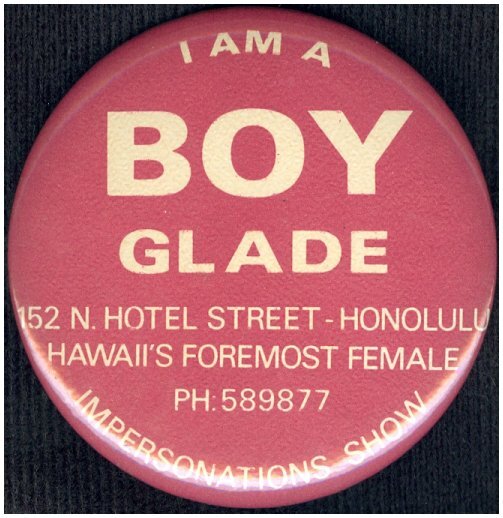
Increased restrictions on drag expression only heightened the dangers faced by members of the LGBTQ+ community. Drag performers and transgender would wear buttons indicating they are boys to avoid facing arrest or outrageous fines. This bright pink button specifically comes from performers at the Glade Nightclub in Oahu, Hawaii. Other queens at clubs across America, like the Black Cat in Los Angeles, would wear similar memorabilia to protect themselves from discriminatory laws. While the act of drag was heavily policed and discriminated against, the drag queens and transgender women of Oahu and Los Angeles found a way to protect themselves and their community members. Drag queens are inventive and defiant, and continue to demonstrate their resilience through hate and discrimination during the 50s and 60s.
"But gays must not invade our privacy either. And their sexual lifestyle must not be flaunted to forced upon us by them in every public fasion imaginable"
The Society of Individual Rights (SIR)
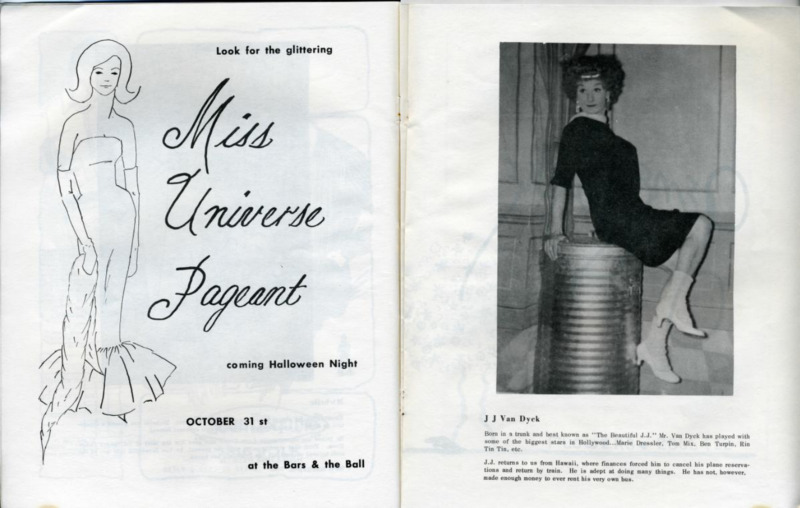
The exclusion of drag queens from activist groups did not last forever. Progressing through the 60s, drag queens continued to demand a place at the table. As discrimination increased and demands continued to be ignored, the homophile movement took a more militant and active approach. More protests and riots broke out demanding the liberation of gay and queer communities. August of 1966 marks one of the first instances of drag queens resisting police violence, predating the well-known riots of Stonewall. Drag queens dining at Compton Cafeteria in San Francisco fought against police officers who wanted to arrest them for the crime of “cross-dressing,” solidifying drag queens and gender-transgression as a powerful force of gay liberation movements. The influence of these groups continued with the Stonewall Riots in 1969, which were led by drag queens and transgender women of color. The Society of Individual Rights (SIR) started including drag performers in their variety fundraising shows, and while some queer community members resisted the inclusion of transgender individuals and drag queens, their influence on the gay rights movement could not be denied. The two pages below show an advertisement for one of these programs, a pageant for Miss Universe and one of their featured performers. The SIR was embracing drag as part of their community and activist mission, and proudly promoting drag artists to others. Through these variety shows the SIR would raise money for projects such a community center complete with a library and recreation hall.