Early Life and Education
Elisabeth Louise Vigée-Le Brun was a portrait artist from 1755 to 1842 in France. Elizabeth was from a middle-class family, and at a young age, she was sent to study at a convent, as this was a common practice for women of her class to attend. Even from an early age, Elisabeth was showing signs of creativity and stepping away from being a traditional woman.
Elisabeth was away from her family for six years studying at a convent before returning to meet them. Elisabeth's father was a pastel portraitist and professor, while her mother, Jeanne Maissin, was a hairdresser. Elisabeth also had a younger brother, Louis-Jean-Baptiste-Etienne, whom, later in life, she would go on to financially support his studies. Her father, Louise Vigée, introduced and exposed Elisabeth to art and artists of the time, while her mother exposed her to aristocrats of the time due to her clientele. This allowed the family to be connected to many high-class people while also exposing Elisabeth to a range of middle and high-class people, and allowed Elisabeth to enter spaces with well-known artworks.
"My love for painting manifested itself even in my infancy. At six, I was placed in the convent and remained there until eleven. During this time, I was always sketching, covering every available surface with drawings."
Elisabeth Louise Vigée Le-Brun
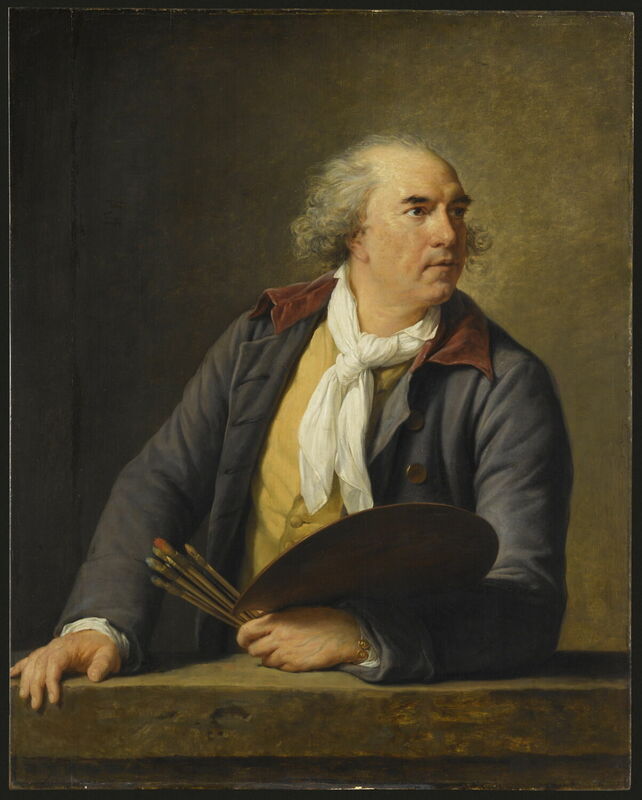
Elisabeth's artist training wasn't conventional for the time, but similar to other women of her time, she was exposed to art through her father, and that is what eventually led her to continue pursuing art. Her father, Louis Vigée, allowed Elisabeth to draw with his pastels in his studio. He noticed quickly that Elisabeth had a keen interest in the arts, and he encouraged her, allowing her to roam freely in his studio. Her father also introduced her to artists that he knew and would go on to help Elisabeth in her “training.” One of these artists was the historical painter Doyen, whom she would speak about their paintings.
Elisabeth went anywhere that she could look at the master's work and study from the artists who were highly recognized and accepted in society. She would often visit the Royal Academy of Painting and Sculpture, where the Flemish and Italian artists inspired her. Her father's connections to artists helped expose Elisabeth to many different artworks of the time, and she continued to grow her circle of artists she knew.
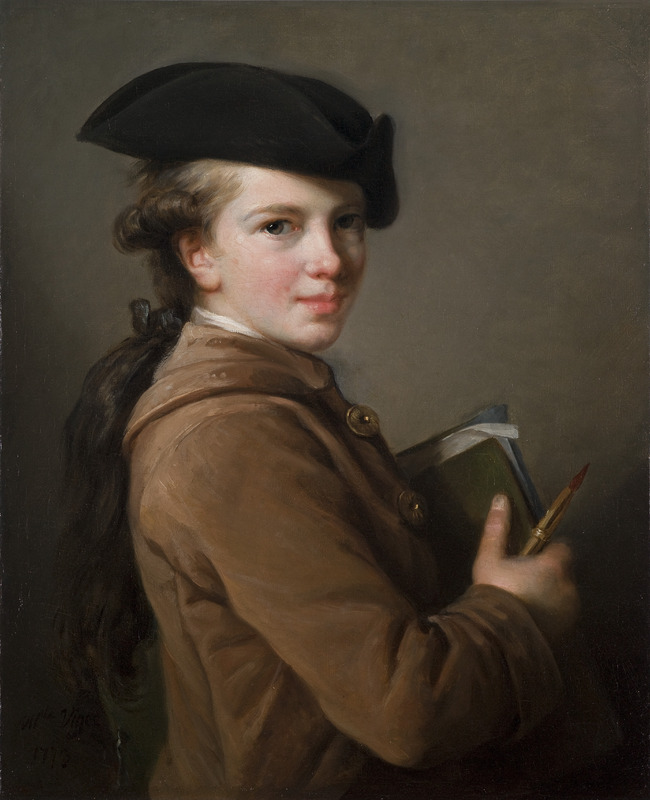
Six years after Elisabeth had returned home from the convent, her father passed away. Elisabeth's Mother noticed how Elisabeth was still grieving over her father, so her Mother decided to take her to the Palais de Luxembourg and would reflect in her memoirs seeing all the modern French painters and how she was not one of them. Later, after Elisabeth’s fathers death her mother remarried a jeweler, whom Elisabeth particularly did not like. At the age of fourteen, the people around Elisabeth, as well as people of high status, started talking about Elisabeth’s artwork. This would lead Elisabeth to meet Joseph Vernet.
Epistle to my sister
Charming woman, painter of delight,
In your nature doth unite
The happy gift of feeling
With the rare gift of genius;
For you, that long since withered palm,
Plucked only by Rosa-Alba,
Is green once more,
And now your future holds in store;
Tell me, by what magic
Did you start in this much vaunted art,
Born of Love apparently,
To brave the perilous path
That leads to immortality?
Louis Vigée (1783)
Joseph Vernet was one of the artists who was Elisabeth's mentor. He inspired her to look into the natural world for inspiration, as well as not tying her to a specific school or style of art. ‘My child,’ he said, ‘do not follow any school of painting. Look only to the old Italian and Flemish masters, but above all. Study her carefully, and you will avoid falling into mannerisms." Most of her studying and knowledge of art came from the art of observation and translation of her own style and perspective of people. Oftentimes, including symbolic objects or expressions to allow a window into the person's portrait, showing a piece of identity.
Elisabeth Louise Vigée Le-Brun found much of her inspiration from the world around her and looked to previous artists for techniques of rendering, but ultimately created her own style that would often highlight female expression and allow for insight from the viewer into the world of the portrait.
"I remember drawing the head of a bearded man when I was about seven or eight years old, indeed I still have the sketch to this day. I showed it to my father who cried out joyfully, 'You will be a painter my child, if there ever was one!'
Elisabeth Louise Vigée Le-Brun