Fleeing the French Revolution
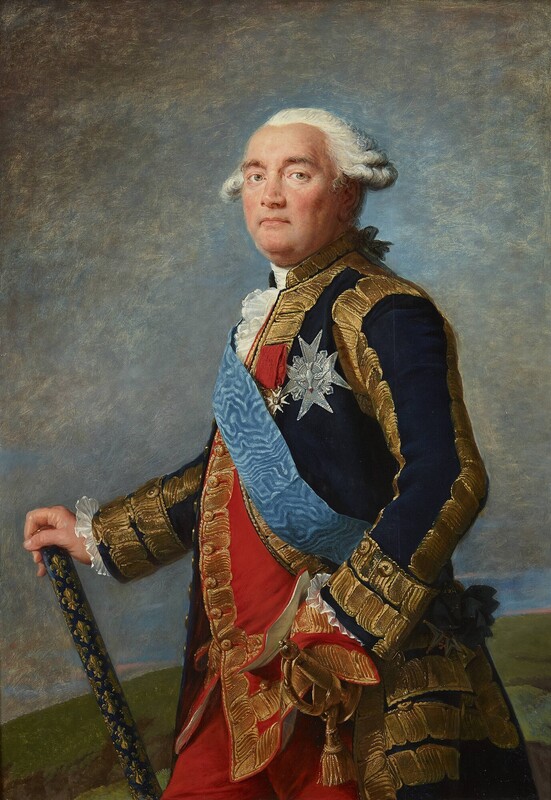
Elisabeth Louise Vigée Le-Brun showed at one of her most notable Salon showings in 1789, the portraits of Joseph Vernet, Hubert Robert, and the Dauphin were shown at the salon. During this period, Elisabeth’s physical and mental health started to decline because of the political and societal state of France. In 1789, although the Revolution had reached its tipping point in France, Elisabeth was at the height of her artistic career. Elisabeth started to hear the whispers of the Revolution.
Elisabeth reflects on this time of her life in her memoirs with thoughts that this was the worst time in her life and the destruction the Revolution had caused. While she was fleeing, her friend Mme Filleul said, “You shouldn’t leave. I shall stay because I believe in the happiness the Revolution will bring… The very next day, the Revolutionaries didn’t hesitate to arrest both Mme Filleul and Mme Chalgrin on the charge of ‘burning the nation’s candles.’ A few days later, they were led to the guillotine.” Elisabeth Louise Vigée Le-Brun, although she was a supporter of the monarch, still had a wide range of friends, some revolutionaries and some against.
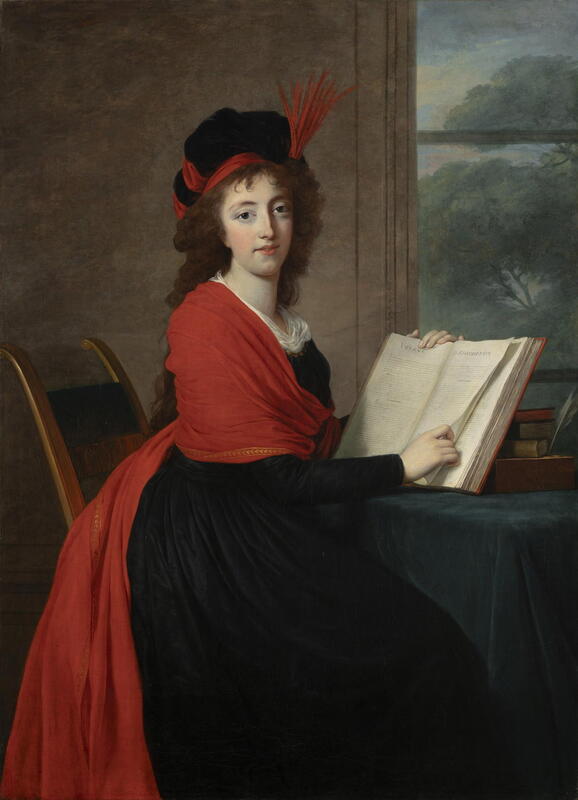
" I feel qualified to estimate the effect that the awful happening in France had upon her, for my own suffering was not so very dissimilar. I learned nothing from the newspapers, for I no longer read any, not since the day I opened gazette in Mme de Rombec's house and saw the names of nine of my friends in a list of thos guillotined; people took great care, in my company, to hide all such articles."
Elisabeth Louise Vigée Le-Brun
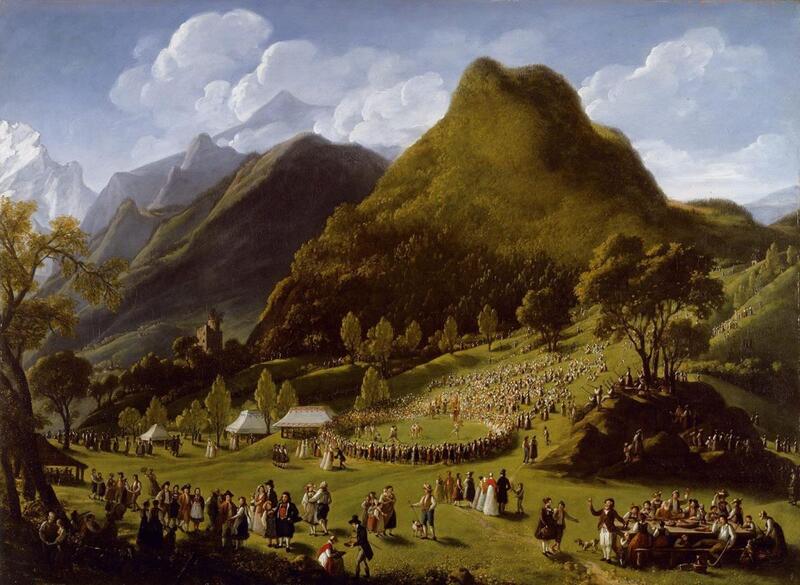
And in October of 1789, Parisians took to the streets to protest the high cost and the lack of bread, making their way to Versailles. The following day, King Louis XVI and Queen Marie Antoinette fled Versailles. Once the King and Queen left Versailles, Elisabeth Vigée and her daughter fled France. Elisabeth’s family was targeted due to her connections as the Queen’s portraitist because of her well-known reputation as a supporter of the crown. Many high-status supporters and people close to the crown were persecuted for their connections with the crown.
After Elisabeth and her daughter, Julie, fled France, they began traveling through Europe and staying in various countries. Elisabeth and her daughter made their way to Italy, where she would continue her artistic practices and study under the Italian masters where they were made. They would then stay in Austria, welcomed by Marie Antoinette’s family. As well as journeying to Russia, where Elisabeth would work in the royal court, as well as commission work for aristocrats. Elisabeth continued to create but started to deviate from solely just portraits and started creating more landscapes and working with pastels. During the years Elisabeth had fled, France had gone through a significant amount of loss and destruction to erase the notions of a feudal system. It would be a long 12 years till Elisbeth returned back to France.
"As I near the French border, the memory of the horrors that took place there are so clear to me that I am frightened to see the sites of thos adominable crimes. I know that my imagination will recreate the scenes. I would almost prefer to be blind to at least to have drunk from the cup of forgetfullness before I set foot on that bloody earth! I feel as though I am marching towards a tomb and I cannot control that dark side of my imagination."
Elisabeth Louise Vigée Le-Brun
Once the Revolution ended after a long ten years in 1799. France, once an absolute monarchy, was now turned into a republic, creating a new political and societal landscape in France. Before the Revolution, women were paving a way to equal rights in their active roles, publishing literature, fighting for equal education, and for equal rights in marriage. Elisabeth reflects on the drastic changes from before the war to the aftermath of the Revolution.
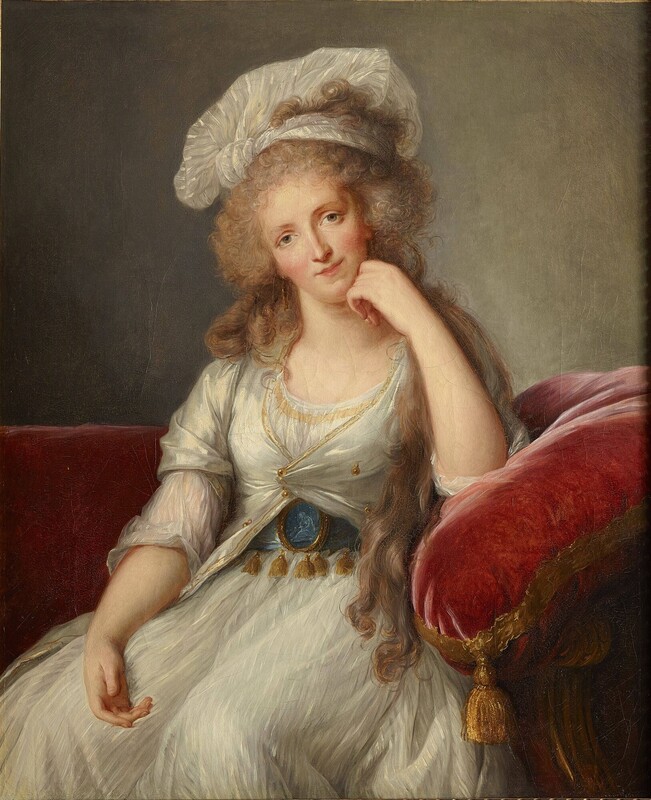
“Besides, it is so difficult today to explain the urbane charm, the easy grace, in short, all those pleasing manners which, forty years ago, were the delight of Parisian society. The sort of gallantry I am describing has totally disappeared. Women reigned supreme then; the Revolution dethroned them.”
-Elisabeth Louise Vigée Le-Brun
Many aspects of Elisabeth's life had been affected by the French Revolution. Once she fled, it became extremely hard for her to return since she supported the monarchy. After she returned, the institutions in France also underwent extreme changes. She had gained admission to the French Royal Academy of Painting and Sculpture, and even though the institution made an exception by allowing four women in after the Revolution, they were not allowed to regain access and were denied acceptance. Although this created roadblocks for Elisabeth Louise Vigée Le Brun, she continued to create throughout her life.