Life as a Working Artist
"These days there are only Modern French paintings on view here and I am the only painter who has not been included in the collection."
- Elisabeth Louise Vigée Le-Brun on the Palais de Luxembourg collection
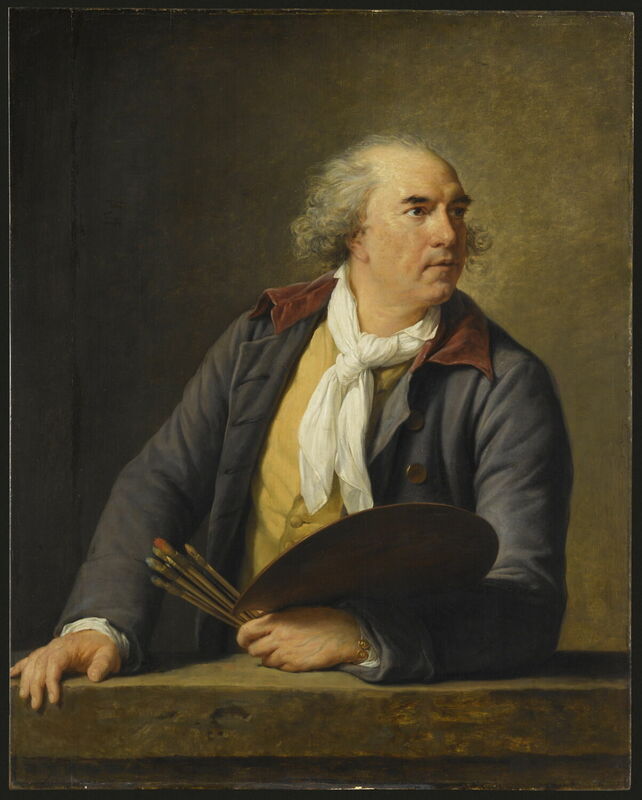
Elisabeth Louise Vigée Le-Brun found much of her inspiration from what was around her; she would frequently visit the surrounding galleries, seeing the Italian and Flemish artists that came before her. Elisabeth also went to many private collections, but none could live up to the love she had at the Palais-Royal. In the various galleries, Elisabeth would absorb the many techniques from Ruben, Rembrandt, Van Dyke, and Greuze. Although Elisabeth had only had her father as a teacher, she began to learn from the masters. During her time studying the master's portraits, she started to excel in her use of lighting and shading. From observing the Italian and Flemish masters, she gained technique, learning how to render from life. Elisabeth started to not only have technical skills but also started to be able to capture a sense of emotion from a woman’s perspective, and added symbolism to invoke the person’s individuality within the portrait. Some of her main inspirations and subject matters surround the Royal Court and the aristocrats in France.
At the age of seventeen, Elisabeth Louise Vigée started to be approached to commission artworks for people who were in her social circle. Elisabeth's commissioned portraits soon started to reach the Royal Court in France as well as Russia, and she started to be paid for her portraits. Many prominent figures in Russia approached Elisabeth for their portraits; this included Count Orloff, an assassin involved in the assassination of Peter III. Elisabeth then also painted a portrait for Mme Geoffrin, who owned a salon, where she’d allowed artists and philosophers to have a space to share ideas. Mme Geoffrin was one of the women who paved the way for the Enlightenment movement, not only in France, but word of what she was doing spread to Europe as well. Similar to Elisabeth, Mme Geoffrin didn’t have a formal background in education. Still, both these women were able to explore ideas and create a place for themselves while being respected in a society that didn’t view women as equals. Both paved the way for feminism through their actions of pursuing their interests as a career. Salons in France were a way for artists to share ideas and their work.
Elisabeth then applied and was accepted into the Academy of Saint Luc at the age of nineteen. This was a prominent school in Paris and was viewed as the second-best art school after the Royal French Academy of Painting and Sculpture. The Academy of Saint Luc was more liberal compared to other institutions of the time in accepting women into the school. In 1774 Elisabeth had her first show at the Salon Academy of Saint Luc. It was a necessity for Elisabeth to start working in order to help the family financially.
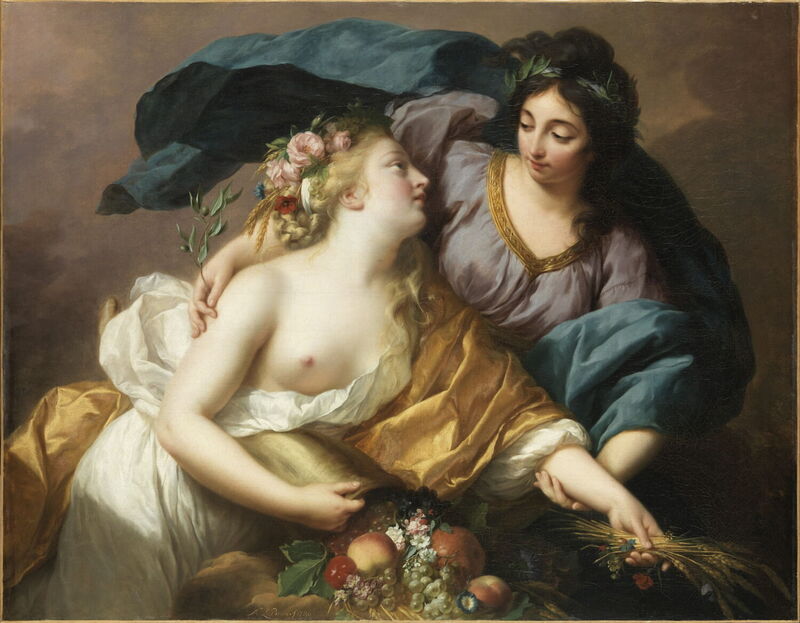
Although marriage during the 1700s was a necessity for women to have some freedoms, ultimately, women were still constrained, but during this time, it was a necessity for a woman to have a male counterpart to be successful financially. It was rare to see a woman financially independent during this time period. Elisabeth proves this to be wrong against all odds. This time in France, women started to gain more traction toward gender equality. Ideas between women started to spread through pamphlets and women writers advocating for laws, love, life, politics, marriage, women's rights, education, the female experience, and history. More and more women started to gain sprinkles of freedom before the French Revolution.
Elisabeth Louise Vigée Le-Brun married Jean-Baptiste Pierre Le Brun, an art collector and art dealer, and became her manager and sorting her finances from her portrait commissions. Elisabeth and Jean-Bastiste had their daughter and only child, Julie Le-Brun, in 1780. Jean-Baptiste Pierre Le Brun had many financial issues, and he had gambled away much of Elisabeth’s commission earnings. Many women during this period also couldn’t just divorce their husbands, but because Elisabeth had connections to the aristocracy, she was able to separate herself from Jean-Baptiste Pierre Le Brun and financially support herself by having control over her own finances during the French Revolution. From this experience, Elisabeth became financially independent and was not only able to support herself but also her younger daughter
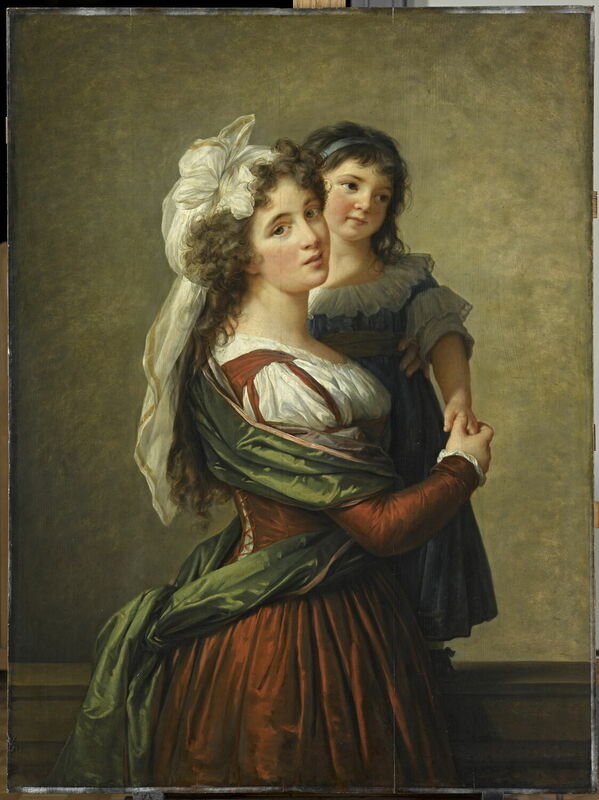
"What would I have done without my work? If I had been ill, you would have let me starve; since, instead of saving money, you have spent it on women who deceived you, you have gambled and lost Monsieur; a thousand and one people have told me that you see me in your own image, but I am not you."
Elisabeth Louise Vigée Le-Brun
(Paris, The Library of Art and Archeology, Triper-Le Franc papers, box 52).