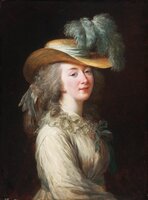
The Royal Painter
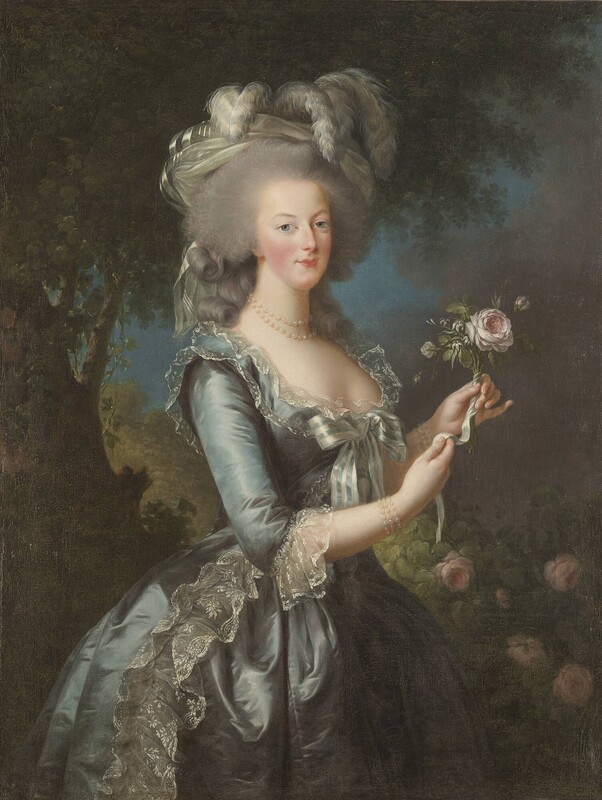
"At the first sitting, the imposing air of the Queen at first frightened me greatly, but Her Majesty spoke to me so graciously that my fear was soon dissipated. It was on that occasion that I began the picture represtening her with a large basket, wearing a satin dress, and holding a rose in her hand."
Elisabeth’s portraits soon started to reach the royal court, and she started producing paintings for many of the ladies of the court, as well as some of the families of the ladies. From her experiences with the royal court, word was spreading through to the elites of society of Elisabeth’s work. Soon, at the age of twenty-two, Elisabeth was commissioned to go to the Palace of Versailles and paint a portrait of Marie Antoinette, the Queen of France, in 1779. Elisabeth commissioned several portraits for the Queen, and soon they started to create a friendship during the time that Elisabeth was painting Marie Antoinette. In Elisabeth’s Memoir, she described the Queen in a positive light, compared to being characterized as vain and living lavishly while the people of France were hungry. Elisabeth, in a letter, says, “Of all the women in France, she had the most majestic gait, carrying her head so high that it was possible to recognize the sovereign in the middle of the crowned court. However, this dignified demeanor did nothing to detract from her sweet and kindly aspect.” Elisabeth showed her first portrait of Marie Antoinette at a salon show, and here Elisabeth received much criticism. Due to the dress Elisabeth depicted Marie, critics say that it is a dress for a private quarter and was inappropriate to paint a Queen in, saying it was like painting someone in their underwear. Although the criticism never stopped after Elisabeth began to show her paintings in Salons, she never gave in to the negative ideas said about her work. Elisabeth continued to believe her works were successful despite the commentary. Elisabeth Louise Vigée Le-Brun would commission artworks for the Queen of France from 1779-1789.
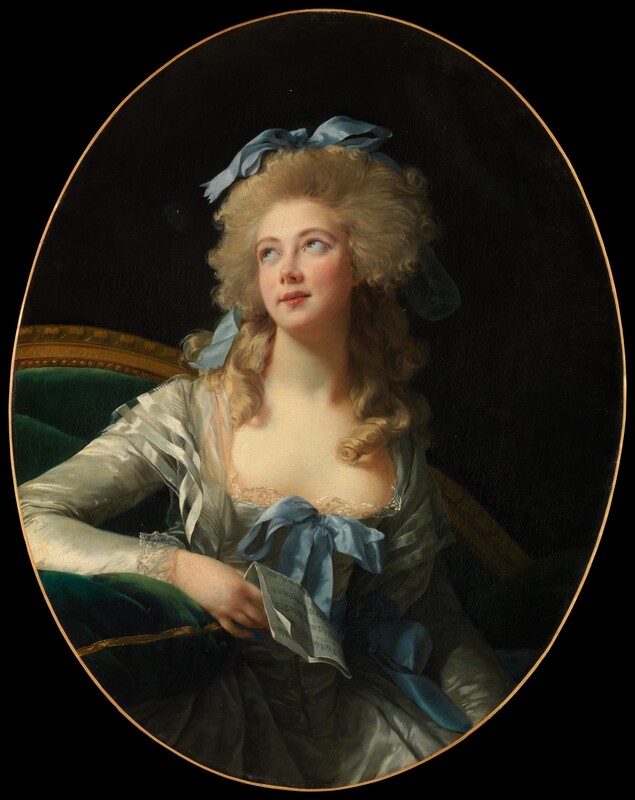
The reputation of Marie Antoinette was usually depicted by painters in a negative light, portraying her in an unrelatable way to French society. Due to Elisabeth’s close relationship with Marie Anntionnte, Elisabeth gained a unique representation of her through their friendship and the time they spent together. Elisabeth remembers a time when she was painting for the Queen and had dropped some brushes. While Elisabeth was pregnant at the time, the Queen refused to let her pick them up, saying, “Leave them, leave them… you are too advanced in your pregnancy to bend down.” And quickly the Queen picked them up for Elisabeth. The Queen and Elisabeth would also often sing togther at the end of Elisabeth finishing the painting. This connection between Marie and Elisabeth shows their commonality through the female experience, as both of them have gone through pregnancy, and allows Elisabeth to empathise how it would feel to lose a child. Elisabeth had a close connection and alliegence to the monacrachy, which will lead her to leave France as the Revolution approached.
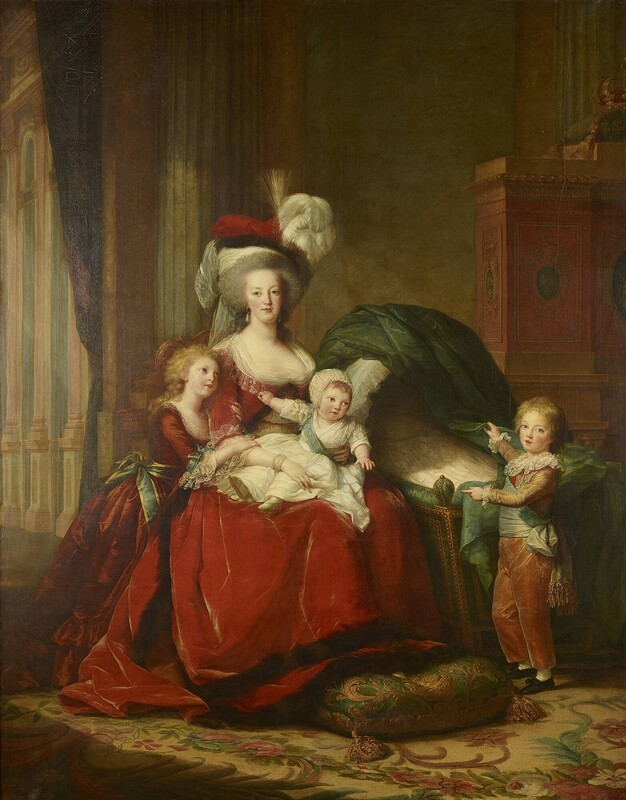
In the portrait of Marie-Antoinette and her family Elisabeth's symbolism and attention to expressions allow the viewer insight into the Queen's life experiences as a mother. Marie is depicted in an extravagant red muslin dress in the center of the composition, holding her youngest son, Louis XVII. Marie Antoinette’s expression is bleak, showing sorrow, gazing blankly forward. On the left-hand side, Marie Thérèse is leaning into her mother's arm in a warm embrace. While on the right side, Louis-Joseph (the Dauphin at the time) is by the cradle of Sophie-Béatrice. Sophie-Béatrice had passed away before the painting had finished, portraying this was to gain sympathy from French society. The symbolism of the painting of the empty cradle and Marie’s expression shows the loss of a mother, but she must continue her Queen responsibilities.