Contemporary Pockets
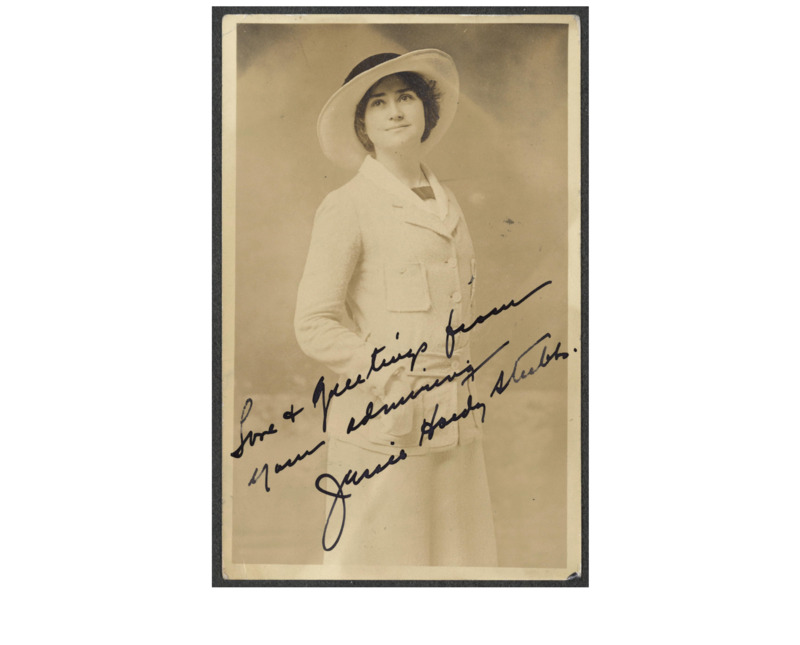
Mrs. Benton Mackaye. Women of Protest: Photographs from the Records of the National Woman's Party. Library of Congress. Ca. 1913.
Pockets as a Contemporary Gender Issue
Times have changed. But have women’s pockets? Scholars believe the tie-on pockets that transformed women’s lives between the 17th and 19th centuries provide significant historical insight into the materiality of gendered understandings and experienced lives. So, what insights does the provision of pockets in 20th and 21st century women’s clothing reveal?
Women achieved emancipation in the USA and Britain in the early 20th Century. The symbolic significance of pockets and their association with power and agency for the women’s emancipatory movement of this time appeared in two contrasting ways. First, the disparaging caricatures of suffragettes wearing clothing with prominent pockets that represented them as unattractive and manly in the popular media. Second, in the fondness for pockets captured by the highly popular suffragette suit. Yet social and cultural expectations still constrain the use, appearance, and appeal of pockets in contemporary women’s clothing.
Female clothing that caters to the male gaze is also implicated. Fashion often focuses on clothing women’s bodies as heterosexual objects of desire rather than for function and agency. This results in the production of tight-fitting and small sizing that leaves no room for pockets. Similarly, clothing desingers and manufacturers produce clothing that includes fake pockets for aesthetic purposes. Popular female clothing designers, like Coco Chanel and Claire McCardell, proved to be notable exceptions as they designed fashionable, flattering, and functional clothes with pockets. The work of Claire McCardell was especially transformational for American women as she designed affordable, off-the-rack clothing with pockets for women.
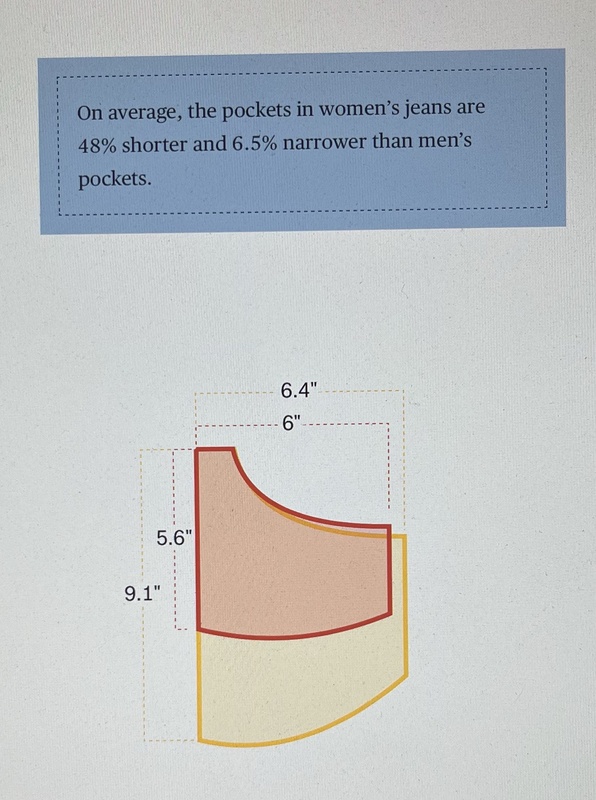
Average Size of Men’s and Women’s Front Pockets in the US Top 20 Jeans Brands. Jan Diehm and Amber Thomas. August 2018.
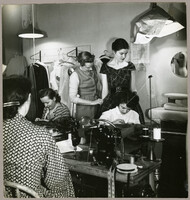
Fashion Designer Claire McCardell Fitting a Dress to a Model. Maryland Center for History and Culture. Date Unknown.
Fashion, aesthetics, and gender politics continue to restrict the provision, form, and functionality of women’s pockets. The fact that women’s clothing does not have pockets, or has pockets that lack the size and function of those found in men’s clothing, frustrates many women. Sadly, pockets remain connected to gendered schemas and understandings which privilege men’s clothing based on historical notions of male power and the idea that only men’s clothing needs to be functional. This manifests in material ways. For example, pockets in women’s jeans produced by the top American brands are flatter and 48% shorter on average compared to men’s. This makes them far less capable of safely holding money, cell phones, and other objects.
The fact that women desire and covet pockets remains apparent in the comments and actions of many women in everyday contexts. The excitement and delight associated with discovering that a skirt or dress has pockets is familiar to many women. Indeed, women share and parody such moments on social media thereby illuminating the continued impact of pockets on the material reality of their lives. Women’s frustration with the provision of pockets is notable in the appeals for pockets on social media, from #itsgotpockets to the impassioned call #givemepocketsorgivemedeath!
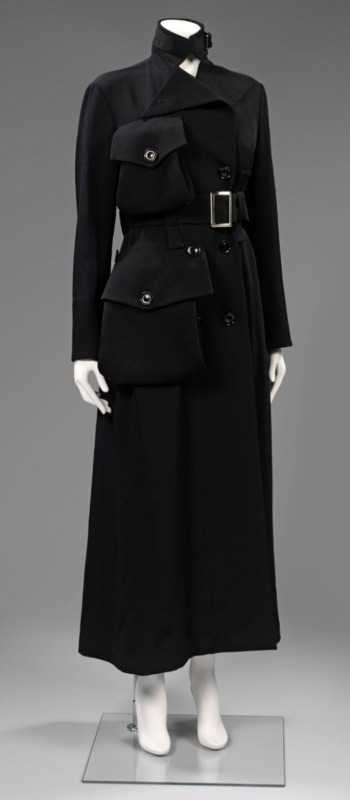
Coat. Victoria & Albert Museum, England. Yohji Yamamoto. 2004.
The idea that women’s clothing does not need to be functional reflects narrow and idealized versions of femininity. This perspective overlooks the work women do and their need for agency in domestic and public spaces. Women, women’s work, and the material impact of clothing on women’s lives remain somewhat invisible, rather like the tie-on pockets that offered a secure, secret, and hidden space that radically transformed women’s agency in the 17th Century.

#GiveUsPocketsOrGiveUsDeath. 21st century.

#WeWantPockets. 21st century.