History of Pockets
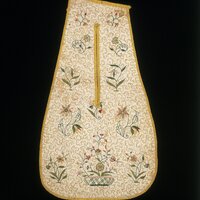
Tie-On Pocket. Victoria and Albert Museum. 1700-1725.
Hidden Objects and Radical Opportunities
Little is directly known about women’s tie-on pockets because they have long been considered an object of peripheral interest, a consequence of the wider marginality of women and women’s lives in historical record-keeping and documentation. Historians believe that pockest derived from mainland Europe. Evidence from paintings and other records indicates that people have used pockets from 1650 until the late 19th Century. However, it is likely that people used them before 1650.
Tied underneath the top layer of women’s clothing and accessible through slits in skirts and dresses, tie-on pockets became ubiquitous across British society. There are examples in many historical and museum collections indicating the popularity of tie-on pockets. But their peripheral status meant that people did not necessarily properly document them and failed to preserve them in intentional ways. However, contemporary scholars like Barbara Burman and Ariane Fennetaux have provided a more complex view of the revolutionary social and cultural impact of these objects. Their work engages a range of diverse sources that reflect the importance of pockets.
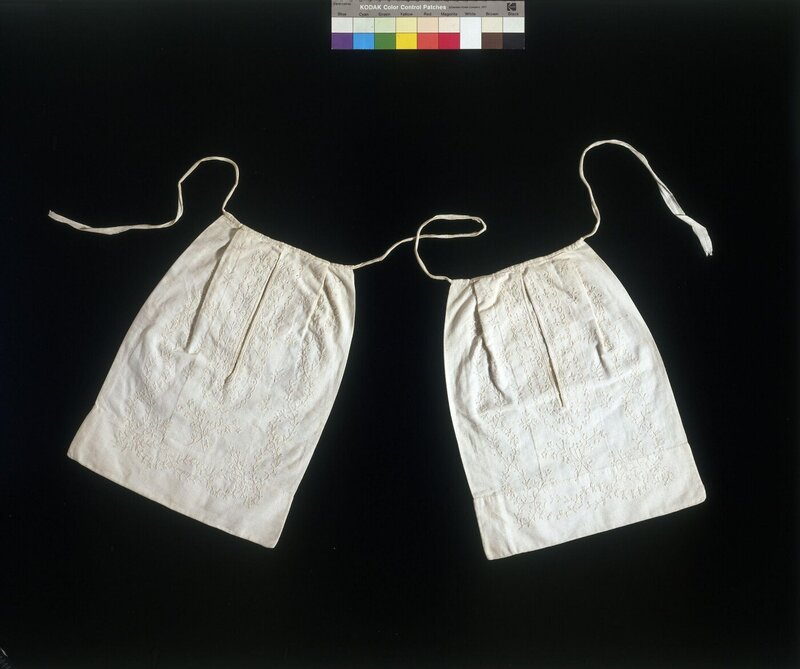
Pair of Pockets. Victoria and Albert Museum. Unknown. 1800-1830.
The popularity and ubiquitous use of tie-on pockets between the 17th and 19th centuries connects directly to the radical opportunities they afforded women. Pockets provided women from all levels of society the opportunity to combat their lack of agency and problematic legal, social, and political status. Pockets gave women the privacy and hidden agency to carry precious, secret, or necessary objects. Worn continually throughout the day, tie-on pockets were typically large, plentiful spaces that meant women could carry a variety of objects for a range of purposes. From keys, to money, to bus timetables, women wore tie-on pockets both inside and outside their clothing. This gave women privacy and the means to carry critical possessions securely with them across domestic and public spheres. This was significant for women from all classes and social realms, but especially for those living in crowded spaces or without access to private or secure spaces, like locking desks, boxes, etc.
Pockets allowed women to keep confidential, personal, and valuable objects close to them, objects that might compromise gender norms like letters or tokens from secret lovers. They also enabled carrying taboo objects associated with women’s intimate lives, like materials for menstruation. While little is known about why they disappeared suddenly after 250 years or more of universal popularity and everyday usage by women, but the shift in fashion to a narrower form of silhouette that made it impossible for women to continue wearing pockets under their dresses may have produced this change.
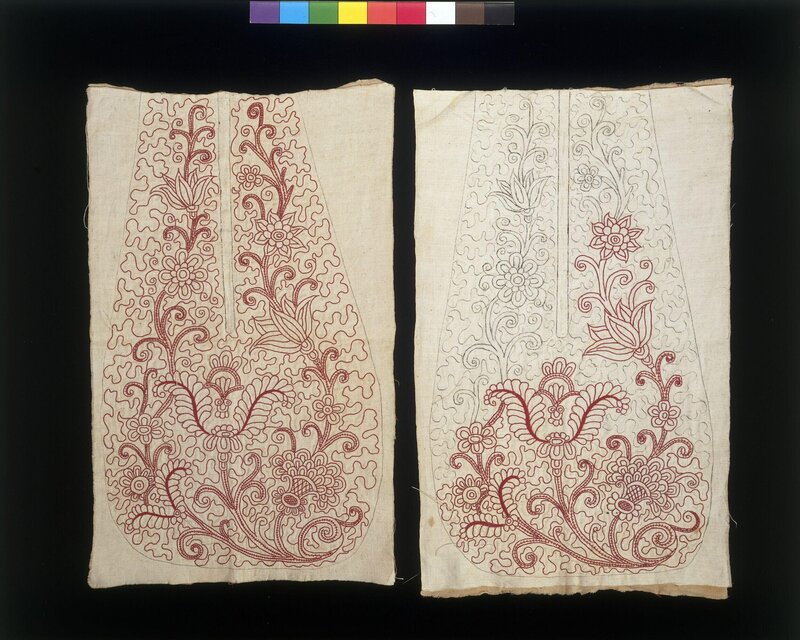
Unfinished, Partially Embroidered Pocket Fronts. Victoria and Albert Museum. Creator Hannah Haines. 1718-1720.
Function, Style and Aesthetics
Women, seamstresses, and tailors made pockets from a wide range of materials. The ways in which they styled pockets reflected cost (price), fashion, and aesthetics of these functional objects. As an everyday utilitarian item that women from all sections of society used, tie-on pockets varied in their quality and styling. They ranged from simple designs made with strong material to decorated pockets embroidered with silk thread. Accordingly, pockets embodied the wealth and aesthetic values of their owners.
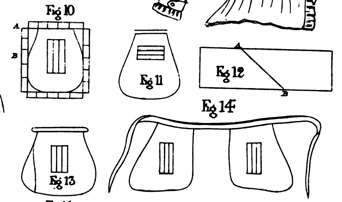
llustrations for Home-Made Women’s Pockets. Old Sturbridge Village, MA and Opus Publications, Inc. Connecticut MA. “A Lady”. 1838.
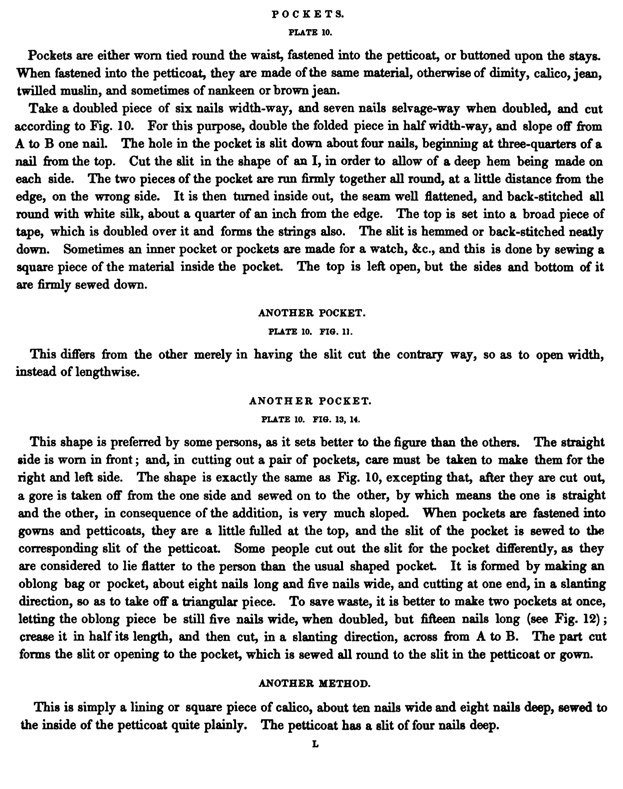
Description for Home-Made Women’s Pockets.
Women often made tie-on pockets at home. Patterns and instructions on how to make different types of tie-on pockets included recommendations for crafting them to depict a flattering fit for women’s bodies, which reveals how deeply embedded tie-on pockets had become as an object of women’s everyday life and domestic production. They could be made from old clothing and other repurposed material as well as from newly purchased materials. Observers believe that women of lower class status wore plain and simple tie-on pockets due to their practicality and endurance. These contrast with more elaborate and decorated pockets made from more luxurious materials that often included silk embrodiery. Worn by those in the upper class, these tie-on pockets reflected popular styles and fashions of the time.
To appreciate the significance of tie-on pockets for women and the historical context of pockets generally, one should recognize that sewn-in pockets routinely featured in men’s clothing starting in the 16th and 17th Centuries. Pockets in men’s clothing were a necessity that reflected their status, power, and functional needs, including privacy. The same affordances historically denied for women.
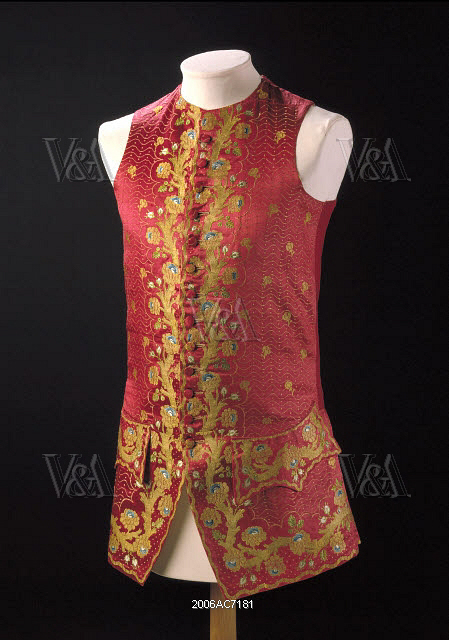
Brocaded Crimson & Gold Silk Design. Victoria and Albert Museum. 1760s.