Introduction
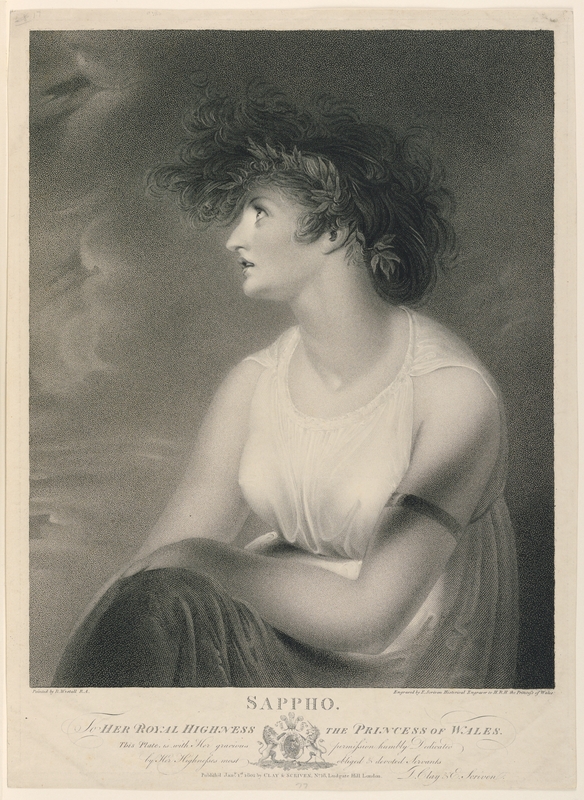
SAPPHO (ca. 620–550 BCE)
Sappho was an ancient Greek poet who is estimated to have been alive around the beginning of the 6th century BCE. She was born into an aristocratic family on the island of Lesbos and lived in Mytilene, a town on the island’s eastern coast. During antiquity, she was a highly popular poet, often referred to as “the Poetess” and even “the tenth Muse” — a title which originates from the famous philosopher Plato’s praise of her. It is estimated that around 650 lines of her work out of 10,000 have been preserved, the rest either lost or ruined. And, unfortunately, the surviving poems that have been preserved are fragmented because the papyri and parchment they were written on deteriorated over time. Only one known poem of Sappho’s is believed to be kept whole: her “Ode to Aphrodite” (Fragment 1). However, a few are taken care of well enough to be read nearly as whole poems, but the majority are just as fragmented as the papyrus they were written on.
INTRODUCTION
Much of the truth of Sappho’s life has historically eluded us, and still does. However, popularly perpetuated tales of the famous poet complicated the matter of discerning her history even further. Approximately two centuries after her death, an ancient Greek comedy came into being that regaled a tale of tragic romance between Sappho and a man named Phaon. The play ultimately ended with her leaping from the cliff of Leucas, ending her life after he rejected her love. This tragedy, and especially the tale of her death, became a source of inspiration for art and literature surrounding the poet when she surged in popularity in the eighteenth century—when some of her fragmented poems had begun to be re-translated and studied in the Romantic era—then again in the nineteenth century, as more of the dilapidated papyri containing her fragmented poems had been discovered in Egypt.
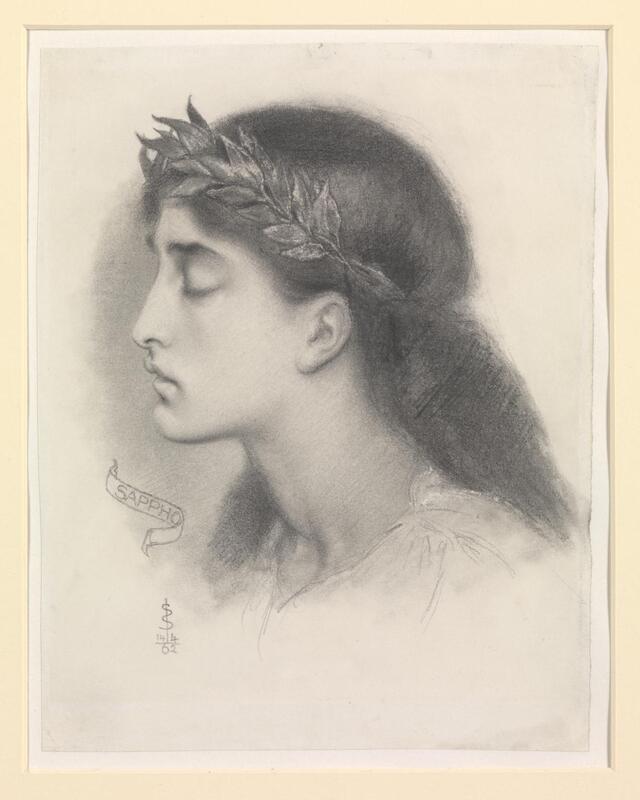
Most of what is certain about the poet can be seen in her writing, however fragmented the poems we possess are. Sappho often wrote lyrical verses about love and relationships. The subjects of her works regarding romance and sexuality were relationships between women. She was so renowned for this that the terms ‘sapphic’ and ‘lesbian’ in modern queer communities were inspired by her. All else that we know can be surmised from where she lived and the society she lived amongst. However, interpretations of her life and work have varied across time, some falling in line with popularly perpetuated tales spawning from fiction, while others sprouted from intentions to avoid her identity as a woman and author whose work expressed queer relationships between women.
This exhibit will explore the literature and art that stemmed from speculation and tales about Sappho, thus creating a characterization of her that has fragmented our understanding of her history. It contains art that lies close to the truth of her work and life, however little it has been documented, as well as a wealth of art that delves into the realm of fiction. First, the exhibit will show how literature shaped the way Sappho was viewed over time. It will then illustrate the variety with which her relationships, true or false, are shown. Finally, it will explore the strange tale of her suicide, as told in ancient comedy, further immortalized by the authors of the 18–19th centuries. At its core, it will demonstrate the truth—including the probable truth—we know of the poet, as well as the way her person has been characterized throughout time, and why the fact and fiction of her history has become so fragmented and difficult to differentiate.
CURATORIAL STATEMENT
Before I decided on a proper focus for this exhibit, I was researching Sappho purely out of curiosity. As an English major with a fondness for classic literature and art history, I was surprised and further intrigued by her history when I discovered how many tales existed surrounding the poet’s life. I encountered many claims about her death, her lovers, and other relationships that contradicted what little I had heard of and read from her works. Upon further investigation, I discovered that many of these stories were either untrue or based on speculation, since her life is sparsely documented and her work only minimally preserved.
This exhibit seeks to show those who, like me, were not well-versed in her life and the stories surrounding it that Sappho is, uniquely, poorly documented but accompanied by a legacy of tales that emerged from fiction—which were often confused for fact across the centuries. First, I will guide my audience through what we know for certain about her, showing depictions of Sappho that do not bear any correlation to these fictions and relate more to the truth of her character. Then, I will delve into exactly what kind of literature shaped public perception of the poet, then explore how this, in combination with the lack of documentation on her life, has influenced how we have viewed her relationships, and, ultimately, her death.
Sappho’s supposed suicide is the most notorious of all these tales of her life. It bears the greatest influence on public perception and depictions of the poet. As such, there is an entire section of this exhibit dedicated to it. I urge my audience to consider this portion of it the most, and I will guide them through its relevance to her life, legacy, and connect it to the previous sections of the exhibit.