Sappho's Relationships
HOW THEY ARE DEPICTED
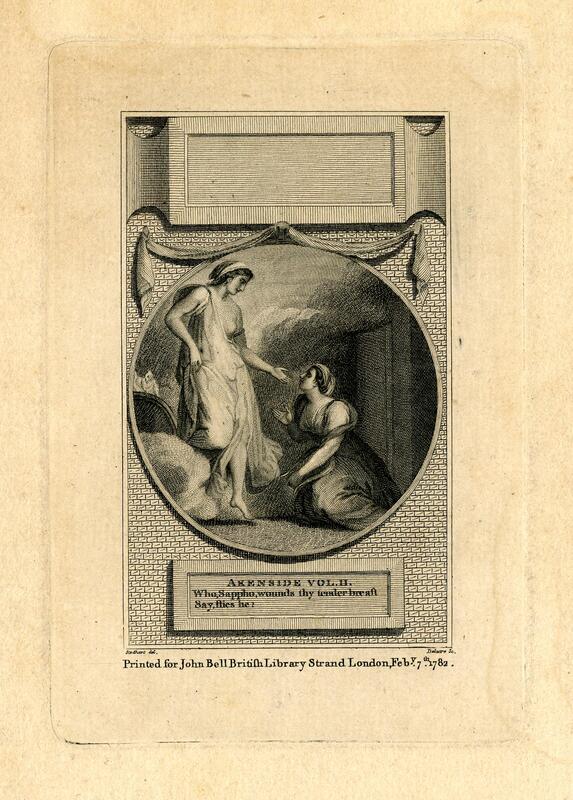
Looking beyond the fictionalized Sappho related to the tale of her love for Phaon, other depictions of her interpersonal relationships are still murky. Since so little is documented about her life, few real connections can be drawn between her and other real people, aside from comments by those who have engaged with and discussed her work. Depictions that do not relate to the previously mentioned story tend to focus on the truth that she had many female companions—friends and mentees—whom she wrote with. They also focus on the queer relationships between women that her poems often expressed, but, without any real woman to connect to her person, sometimes she is merely illustrated with ambiguous women, women of myth—connecting to her Greek heritage and the time period in which she wrote—or, oddly, with real women who have no verifiable bond with her.
TRUTH AND PROBABLE TRUTH
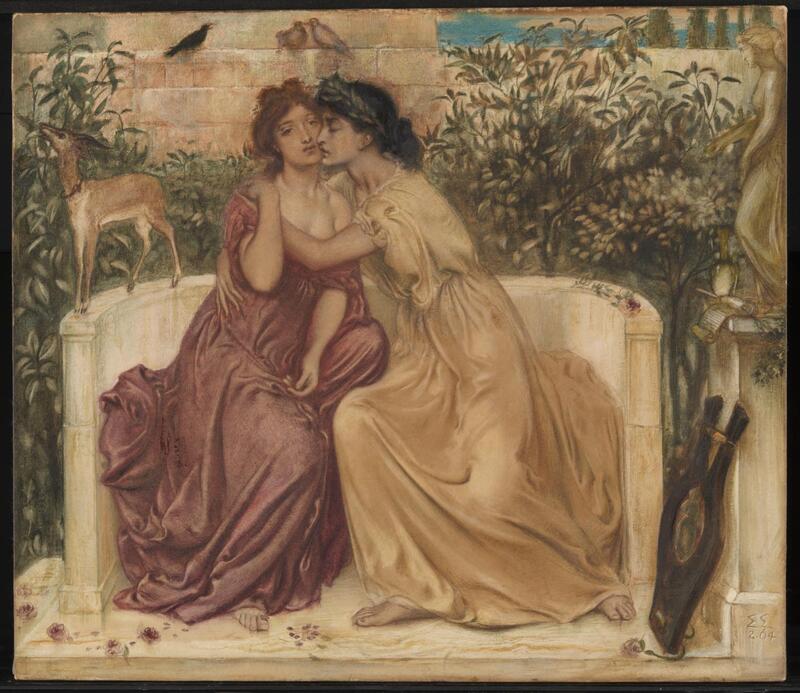
One of the most famous artworks depicting Sappho is Sappho and Erinna in a Garden at Mytilene (right). It serves as another interesting example of how so much myth and misinformation surrounds popular depictions of her, as the sources which once encouraged the notion that they were companions, if not lovers, are now known to be untrustworthy. In fact, scholars now firmly believe that Erinna was alive in the later 4th-century BCE, closer to the Hellenistic period, and lived on the island of Telos rather than Mytilene. This places a gap between Sappho and Erinna that disqualifies this previously widely held belief of a relationship between the two.
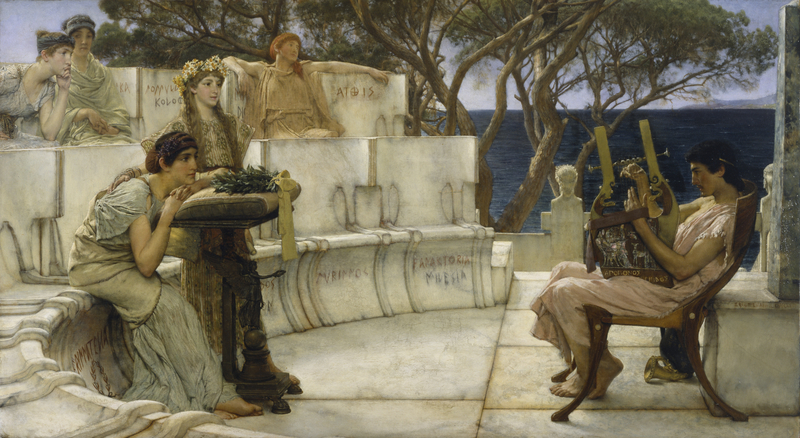
On the other hand, there is still room for probable truth in interpreting the poet’s life. In drawing comparisons between Sappho and other famous figures in her region during the time period she was alive, scholars have been able to identify people who would have either known of or interacted with her. One such example is the Greek poet Alcaeus (ca. 620–580 BCE).
As a fellow lyric poet, who also helped shape the foundations of the lyrical poetry genre, Alcaeus also lived on the island of Lesbos in Mytilene. He additionally belonged to an aristocratic circle that is plausibly connected to the very same circle Sappho was born into. The pair performed for the same audiences and were both on the same side of a dispute between rivalling aristocratic communities on the island alongside similar political and social circles. In this instance, there are no facts to disprove their familiarity, and more facts to prove they would have known about the other—regardless of how little that extent is known for certain.