Sappho's Character
WHAT DO WE KNOW?
The facts we possess regarding Sappho are few. What is certain about the poet and her life is:
- Where she lived — the island of Lesbos in Mytilene.
- Her approximate lifespan — ca. 620–550 BCE.
- Her circle of society — she was born into an aristocratic family.
- That which her few preserved poetry fragments discuss.
Further, well-supported, suppositions about her life have also come from texts by other authors regarding her. For example, Plato’s praise of the poet.
HOW IS SHE PERCEIVED?
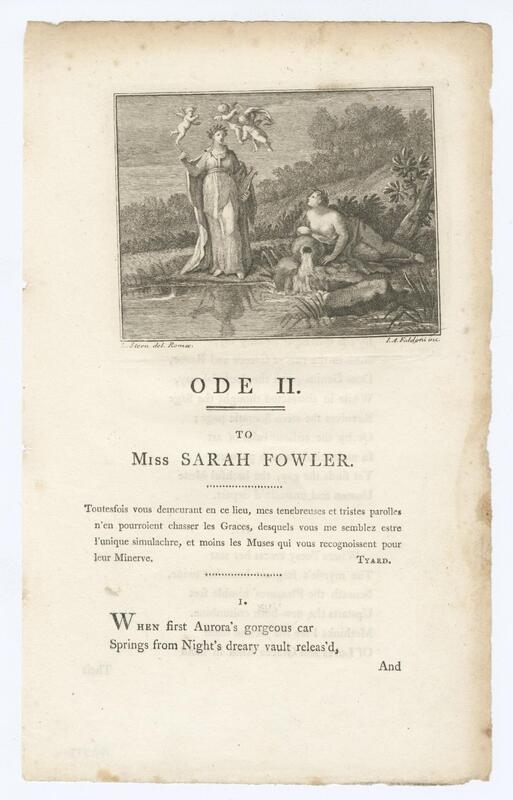
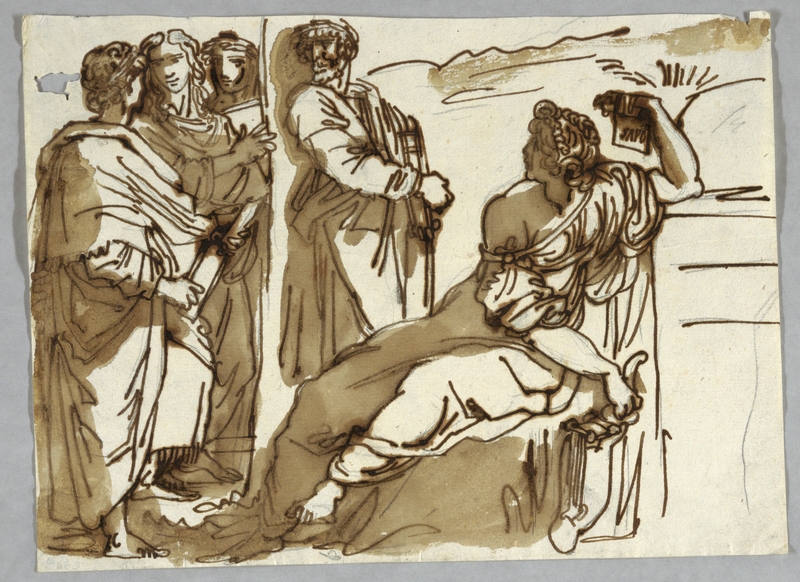
Excluding interpretations of Sappho that stem from fictions, she is a highly revered ancient poet whose writing style is considered to be one of the largest influences that founded the genre of lyric poetry. With works that explore romantic love and longing between women, or from one woman to another, she is also commonly viewed as a famous queer historical figure. With so much of her life left undocumented or unknown—aside from her incompletely preserved body of work and a few highly probable facts—her history is elusive. Literature and art that focuses on the few facts we possess of her history often depict her for her most notorious traits as a lyrical poet who expressed admiration for women in her work. Her stature amongst famous poets is so great that she is often viewed as one of the “greats,” regularly grouped with authors and other massive historical figures like Plato, Francisco Petrarch, the Greek god Apollo, the Muses, and many more.
“He seems to me equal to gods that man
whoever he is who opposite you
sits and listens close
to your sweet speaking
and lovely laughing—oh it
puts the heart in my chest on wings
for when I look at you, even a moment, no speaking
is left in me”
— Sappho Fragment 31 lines 1-8, translated by Anne Carson
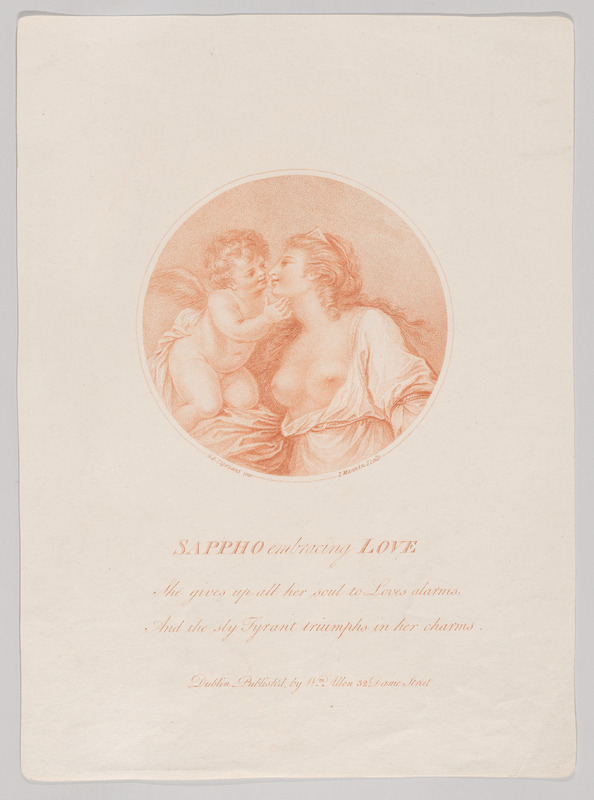
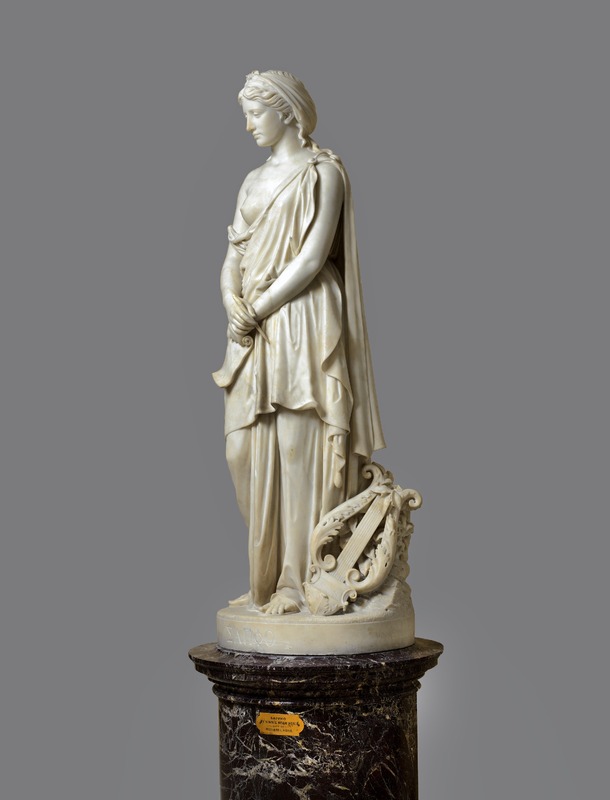
Objective portrayals of her character are often simple and lacking in extensive story, as so little is known for certain of her life. It is rare to see her depicted without a lyre, the instrument both symbolic and integral to her lyrical verse. It is also common to see her associated with themes of love, represented either mythically or physically, since it is so characteristic of the themes of her poetry. In line with this, she can often be seen in association with women, whether to illustrate romance, friendship, etc. in conjunction with them being the object of her expressions of the aforementioned themes in her work. Most important of all across every interpretation and presentation of her character—whether true or fictionalized—is her femininity. Her identity as a woman is critical to her legacy, but it also played a role in the manner with which her fame, poetry, and history was handled across the centuries.