Crafting Techniques
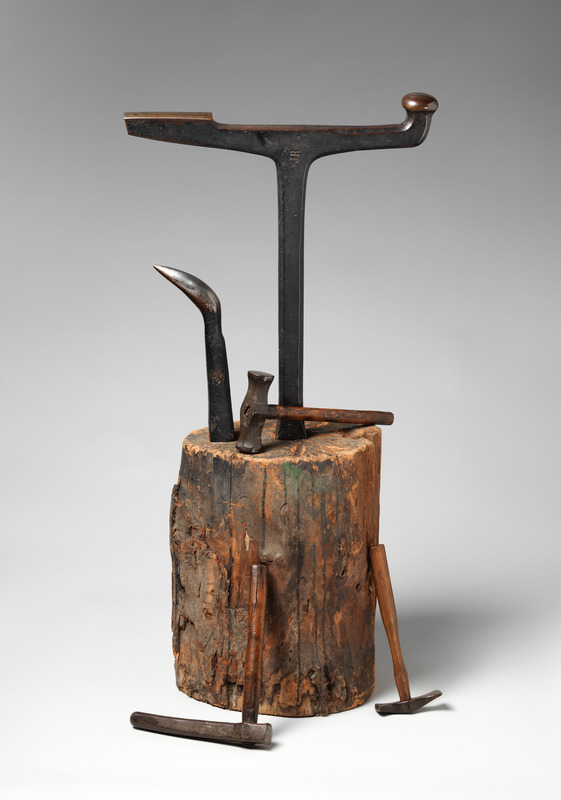
Before crafting could begin, the armorer would first have to procure his materials. The workshop would most likely have a supply of metal and other stock on hand, though in some cases, such as a particularly large order, additional supplies would need to be purchased. Iron was the most important raw material, and could be acquired through a variety of means, such as recycling old armor plates or being provided by the patron. If he was wealthy enough, the armorer could produce his own iron; as Antonio Missaglia did in 1492 when he held the lease on an iron mine.
After supplies were purchased, the armorer would hammer out the sheets of metal to achieve the desired thickness and then cut and shape the sheets into the appropriate shape using chisels, hammers, or bench shears. When hammering plates, there were three main techniques used - doming, raising and curling. Raising was used to create volume in a flat surface, compressing the metal over a take with a hammer pen striking the exterior where it made contact with the plate. Doming, by contrast, was a technique where, instead of compressing, the metal would be stretched by laying the sheet over a concave surface and hammering the metal with a domed hammer to achieve the desired depth. In some cases, doming would be done with an anvil, but only to restore a piece to the original shape. The third technique, curling, is the the gradual shaping over an entire plate, allowing for gentle hammer work which leaves shallower marks, and is commonly used on curved plates, such as lames - small plates riveted together to allow for greater flexibility and movement.
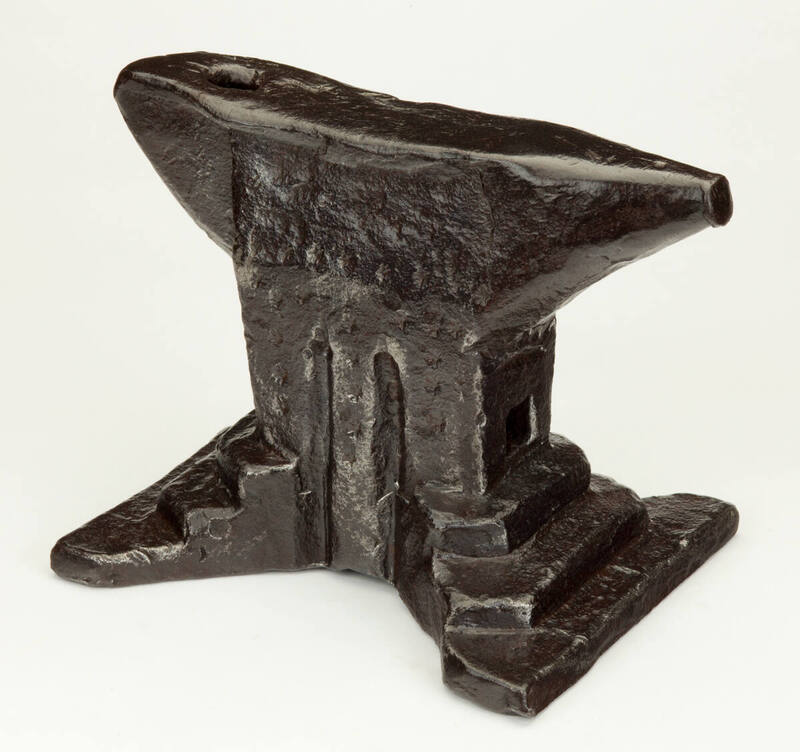
Once the basic shape was achieved, more intricate hammering techniques were used to smooth and decorate the surface. Though not necessary for function, planishing was a process of cleaning up the rough outer surface of the armor by smoothing the exterior and removing large hammer marks through a series of close blows done with a flat-faced hammer. This process was the only which had to be done when the metal was cold, in order to achieve more precision with the metal.
After planishing, the armorer then uses other methods to add different elements on the surface of the armor, such as fluting and rolling. These techniques added a decorative flair to the armor while also smoothing the cutting edges of the metal, making it more comfortable to wear.