Workshops and the Division of Labor
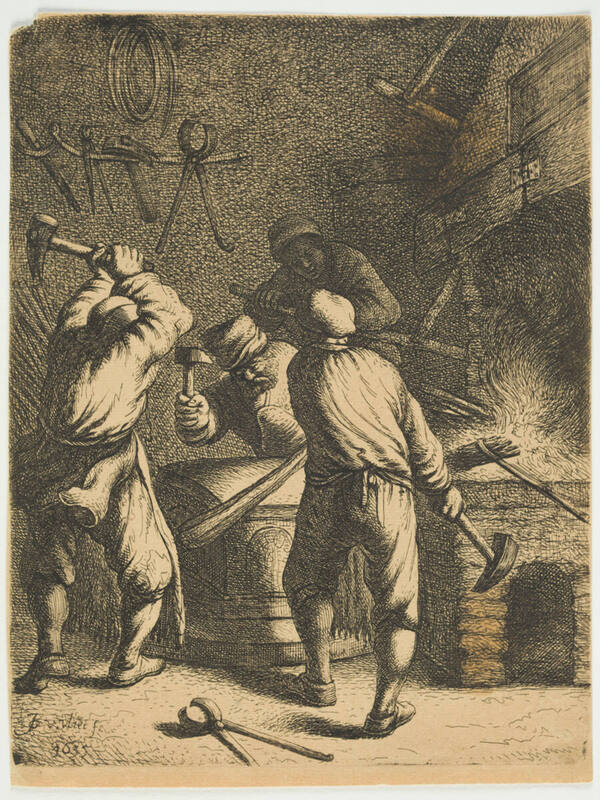
There are two main types of workshops in the medieval world - the court workshop and the free workshop. Both worked similarly, albeit with a few notable differences. In the court workshop, the armorer has noble patron they are contracted to, and serve them almost exclusively - such as the Royal Workshop at Greenwich, established by Henry VIII (1491-1547) , or the court workshop at Innsbruck in the Holy Roman Empire which served Emperor Maximilian I (1459-1519). For the free workshop, the way the workshop worked would vary, depending on if they were part of a guild system or not, and if they were, how the city's guild functioned. For workshops in Nuremberg, within the Holy Roman Empire, armorers applied annually for a license and most workshops worked on one part of the suit and focused on crafting munitions armor - readily made armor that has adjustable straps to fit the buyer. In Augsburg, the workshops have looser guild restrictions and, while still subject to approval from the guild, had wealthier patrons and thus crafted more intricately decorated suits in comparison. Although the guild imposed restrictions and regulations, free workshops were in a way more able to conduct business with a variety of patrons. However, unlike court workshops, they were largely responsible for finding their own raw materials and tools needed to complete their work.
Although Italy had court and free workshops, the city of Milan - the center for armor making within the country - did not have a guild system until the 16th century. Instead, as the Missaglia armorer family was based out of the city, they had an armorer company that was reminiscent of the merchant companies from the Middle Ages. So successful were they that several princes found themselves indebted to the Missaglia family.
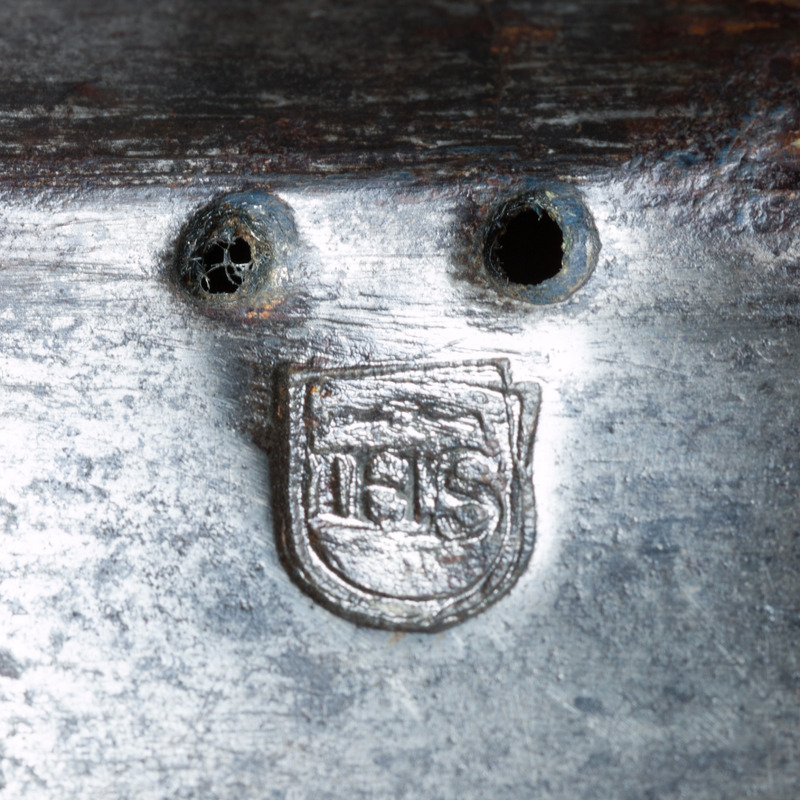
Within the workshops, the work was divided by skill-level and speciality, with many of the tasks outsourced to other workshops and trades if the required skills or tools were unavailable to the workshop crafting the armor - such as contracting goldsmiths to gild pieces of armor as a decorative technique. For some suits, several workshops were involved in the crafting of a single harness, as was often the case for workshops in Italy where work was frequently "subcontracted" to multiple shops, allowing for a full suit to be crafted much quicker than one which was worked on by a single shop, as each component was crafted more or less simultaneously. When completed with a suit, the workshop or armorer would stamp their seal into the piece to serve as a sort of signature, and those produced under an armorer's guild would also bear the guild mark, to show that it has passed inspection. Suits made by various workshops would have various marks, each component stamped by the workshop who crafted it. By contrast, court armorers were less likely to mark their work, as it was implied that it was theirs by virtue of who was wearing the armor. If a suit was being worn by Emperor Maximilian I, it would be inferred that it was the work of Konrad Seusenhofer ( c. 1500).